Imagine a drive-thru—but without the cars.
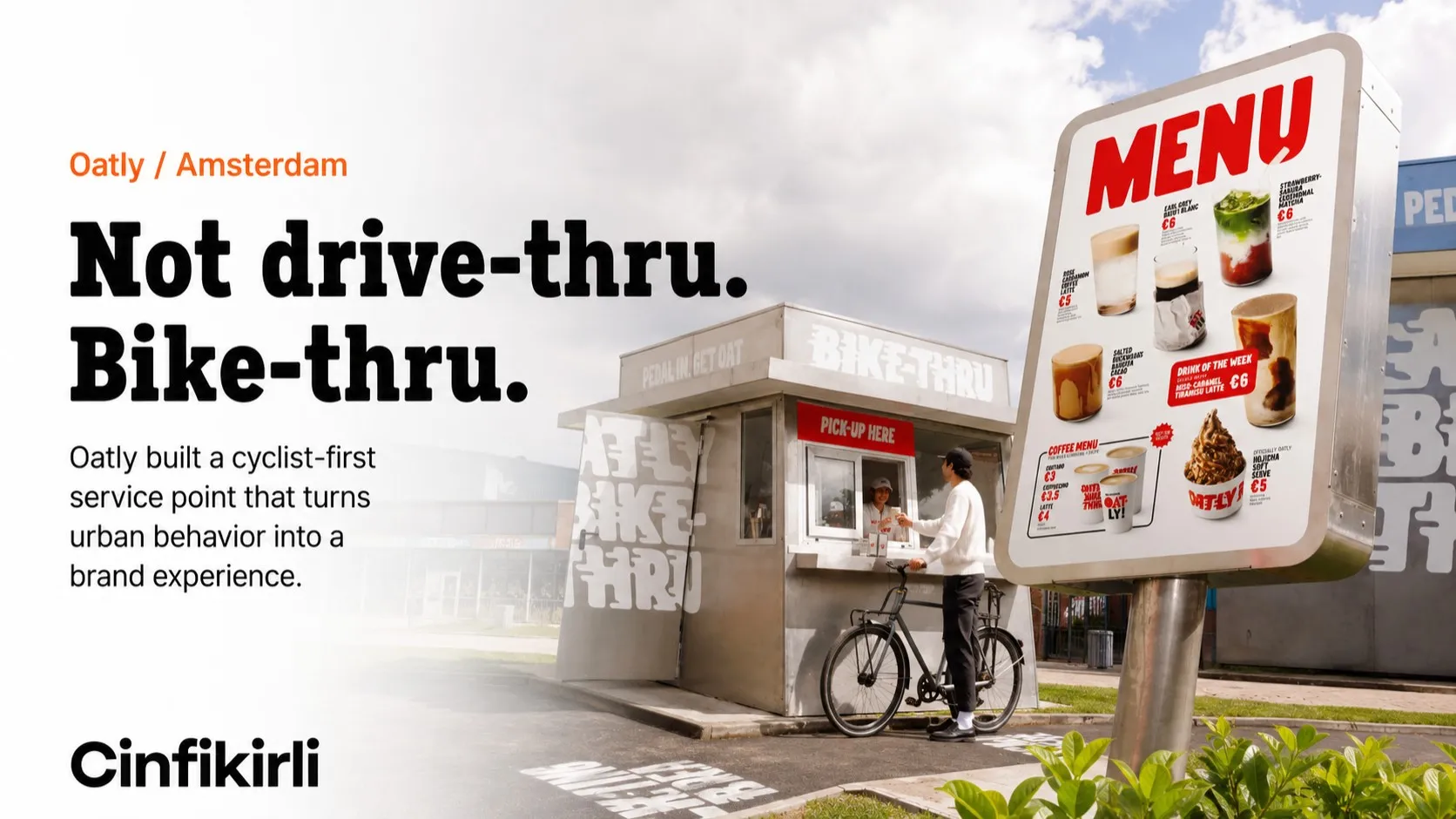
No engine noise. No exhaust. No driver rolling down the window to order. Instead, there are people in Amsterdam picking up their coffee while still on their bikes. That's exactly what Oatly's Bike Thru is: a small but sharp brand move that takes the classic drive-thru behavior out of the car and onto the bike.
Oatly set up a pop-up at Papaverhoek 24 in Amsterdam, open until June 7, 2026. The brand positions it as the world's first Bike Thru, where cyclists can order and pick up oat milk-based drinks without dismounting.
The point here isn't just "they gave coffee to cyclists."
The point is this: instead of preaching sustainability like a sermon, Oatly slips into a behavior the city is already doing.
Good sustainability ideas don't scold people
The most tedious part of sustainability communication is this: at some point, the brand turns into a teacher.
"You should do this."
"You shouldn't consume that."
"We need to change for the planet."
"Make more conscious choices."
Okay. Not wrong. But people already see enough warnings every day. Consume less, consume better, consume more correctly, consume more ethically. At some point, it stops feeling like brand communication and starts looking like a personal development board.
Oatly's Bike Thru doesn't fall into that trap.
Because it doesn't tell anyone to "ride a bike." Amsterdam already rides bikes. The city has more bikes than people, 400 kilometers of bike paths, and cycling isn't a backdrop to daily life—it's the rhythm. Oatly layers a brand experience onto that rhythm.
Let's call it "behavior-embedded activation."
Here's the definition: instead of asking people to form a new habit, the brand naturally places its product inside an existing one.
This matters. Because most brands still think: campaigns create behavior.
Sometimes they do. But more often, a brand doesn't create behavior; if it reads existing behavior well, it finds a more fitting place for itself.
That's what Oatly did.
There's a bike-friendly city.
There's a plant-based milk product.
There's a coffee culture.
There's a grab-and-go behavior.
The brand combines them. Instead of saying "look how eco-friendly we are," it makes an eco-friendly choice feel like a daily reflex.
Disrupting the drive-thru isn't just changing the sign
The drive-thru format is a child of car culture.
You're in the car. You don't get out. You order. You pick up. You leave. Speed, comfort, and contactlessness all line up. This format, which spread from America to the world, is actually a small stage showing how much city design and consumption habits are built around cars.
Oatly swaps the vehicle in that stage.
The car goes. The bike comes.
Okay, is that it?
No.
Because when the vehicle changes, the whole meaning changes. A drive-thru normally represents the relationship speed has with the car in a city. A Bike Thru, on the other hand, ties the same convenience to a lighter, more everyday, more local, and less noisy behavior.
That's why it's not just "they wrote bike instead of drive."
This isn't a wordplay; it's a format play.
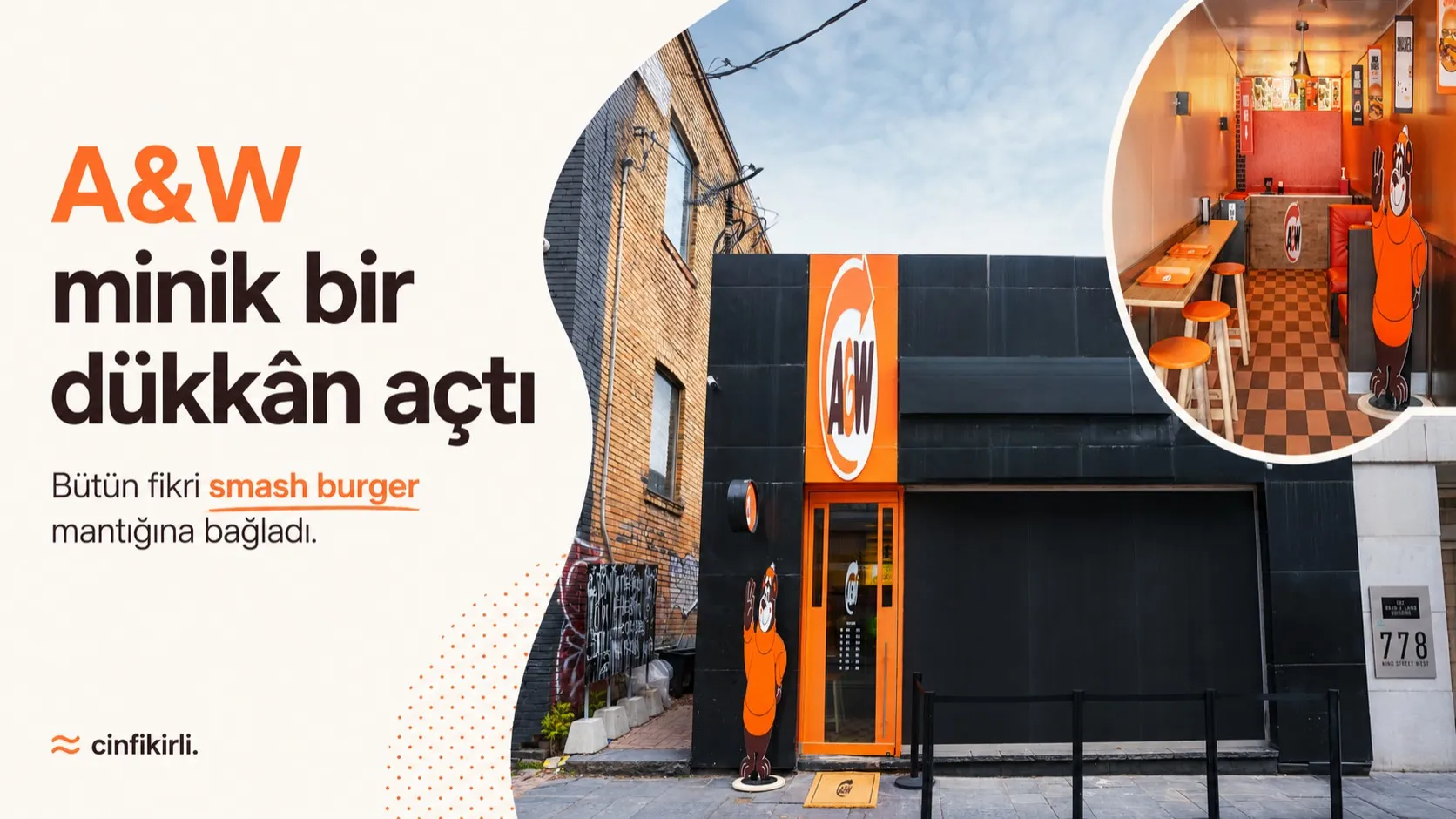
When A&W Canada turned its restaurant into a crushed pop-up for the smash burger launch, it brought the verb in the product name to the physical space. When KFC México paired Roberto Carlos with a chicken leg, it linked the celebrity's cultural memory to the product. When VIA Rail turned the seams of a baseball into train tracks, it built a route in a single object. Here, Oatly rewrites a service format according to the city's behavior.
They're all from the same family.
They don't explain the product.
They change the behavior around the product.
Or rather, they embed themselves better into the behavior.
If you miss this difference, Oatly's work looks like "a cute pop-up." But the real lesson isn't in the pop-up. The real lesson is in how the brand brings its own claim to the ground without fighting the city.
Even the menu doesn't act like coffee—it acts like a season
Oatly's Bike Thru isn't just a "grab an oat latte and go" kind of deal.
According to Creapills, the brand builds an approach within its "Future of Taste" strategy that resembles fashion codes: seasonal lookbooks, changing collaborations, different flavor recipes. Over the course of the operation, four European coffee roasters step in: Nomad from Barcelona, April from Copenhagen, Wide Awake from Brussels, and Dak Coffee Roasters from Amsterdam.
That's a nice detail.
Because if the pop-up experience had just stayed at "come by bike, get coffee," the idea could have been a one-hit wonder. But the menu language makes the whole thing a bit more editorial. Recipes like miso caramel tiramisu latte, Mystery Drink, rose-cardamom coffee cloud, salted gochujang barista cacao, and strawberry-sakura genmaicha matcha feel less like a regular coffee menu and more like a small collection of tastes. Offering ClassPass users a 35% discount throughout the operation also ties the experience to a specific urban mobility crowd.
Why does this matter?
Because Oatly isn't just talking about sustainability here. Taste, city, coffee, bikes, and lifestyle all meet in the same place.
Most sustainable brands stumble here. The product is right, the stance is right, the issue is right. But they forget the fun part. While trying to convince people, they forget to give them a little desire.
Oatly knows this.
It doesn't present plant-based milk as a "sacrifice."
It doesn't present the bike as an "ethical choice."
It doesn't present coffee as a "conscious consumption object."
It turns all of it into an everyday city gesture.
That's the real intelligence here.
The right city is half the campaign
The choice of Amsterdam isn't a coincidence.
According to the context in the source article, the city aims to be carbon neutral by 2050, wants to increase the share of plant-based protein in the public's diet from 40% to 60% by the end of the decade, and is noted as the first capital to restrict meat and fossil fuel ads in public spaces.
So Oatly isn't setting up the idea in a vacuum.
The campaign looks in the same direction as the city's existing political, cultural, and daily flow. That's why its credibility increases. Because the Bike Thru doesn't look like "the brand's fantasy" in Amsterdam. It looks like a continuation of the city's own sentence.
Most brands make a mistake here.
A city is chosen.
Then a generic campaign is slapped onto that city.
A couple of local words are added.
A building silhouette is placed.
A neighborhood name is mentioned.
Then it's called "local insight."
No.
Being local isn't using the city's postcard. It's touching the city's behavior.
That's why Foot Locker's chess project with La Firme for Marseille is a good cousin example. By turning Bonne Mère into a queen and TN sneakers into pawns, it rebuilt chess pieces with Marseille codes. In that project, the point wasn't "running a campaign in Marseille"; it was bringing Marseille's own cultural objects into the game.
Oatly does something similar in Amsterdam.
It doesn't use the bike as decoration. It turns the bike into a service model.
There's a serious difference.
Would this work in Turkey?
This exact idea wouldn't work everywhere in Turkey.
For it to work, three things are needed: city behavior, product fit, and operational courage.
For example, a small version could work on a coastline where bike culture is more visibly woven into daily life, around a university, or on a neighborhood scale. But if you plop it down in front of a random shopping mall, the naturalness Oatly captured in Amsterdam disappears. Because without behavior, activation becomes decoration.
Sound familiar?
"Young people hang out here."
"Let's do a bike theme."
"And hand out some coffee."
"We'll set up a photo spot."
"An influencer will come."
It didn't work.
The essence of this isn't "bike aesthetics"; it's bike behavior.
For it to work in Turkey, the brand should first ask: Where, how, on what, and in what rhythm are people already moving? Then, can the product truly become part of that rhythm?
For example, the rhythm of someone rushing to work in the morning is different. Campus circulation is different. A weekend stroll along the coast is different. A courier's rhythm is different. A family with kids moving around a park is different.
You don't set up the same pop-up for all of them.
It's not a job for flat-rate localization. Localization isn't translating the sign. It's translating the behavior.
That's what Oatly did in Amsterdam: it doesn't translate "drive-thru" into Dutch; it translates it into Amsterdam behavior.
Which behavior can your brand slip into?
It's easy to close this campaign by saying, "Oatly did something fun again."
But the real question is more useful: Is your brand asking people for a new behavior, or is it embedding itself into something they're already doing?
If you're a coffee brand, do you see coffee only as a drink, or as a transition rhythm of the day?
If you're a transportation brand, are you just moving people from point A to point B, or are you making existing city habits easier?
If you're a food brand, do you only think of your product on the supermarket shelf, or in the small rituals people create on the go, at school, at the office, on the coast, while waiting in line?
Good activation starts here.
No, it's not setting up a booth.
No, it's not putting up a QR code.
No, it's definitely not opening a photo spot.
Good activation is where the brand enters human behavior without friction.
Oatly's Bike Thru shows this. Without amplifying the sustainability message, it adds a small service gesture to Amsterdam's bike rhythm. That's why the idea doesn't talk big but works clearly.
Because sometimes a good brand move isn't telling people to "change."
It's putting the right product in their path on the road they're already taking.