In some countries, cat love starts at home and stays there.
In Japan, however, cats spread across a much broader cultural landscape. They constantly find new forms in cafes, characters, souvenirs, stationery, home accessories, design objects, and small everyday products.
That's why a "cat-themed product" isn't surprising in Japan on its own. The real issue is how small, how strange, and how personal that love can stem from a behavior.
Necoichi's "edible cat fur" idea sits right here.
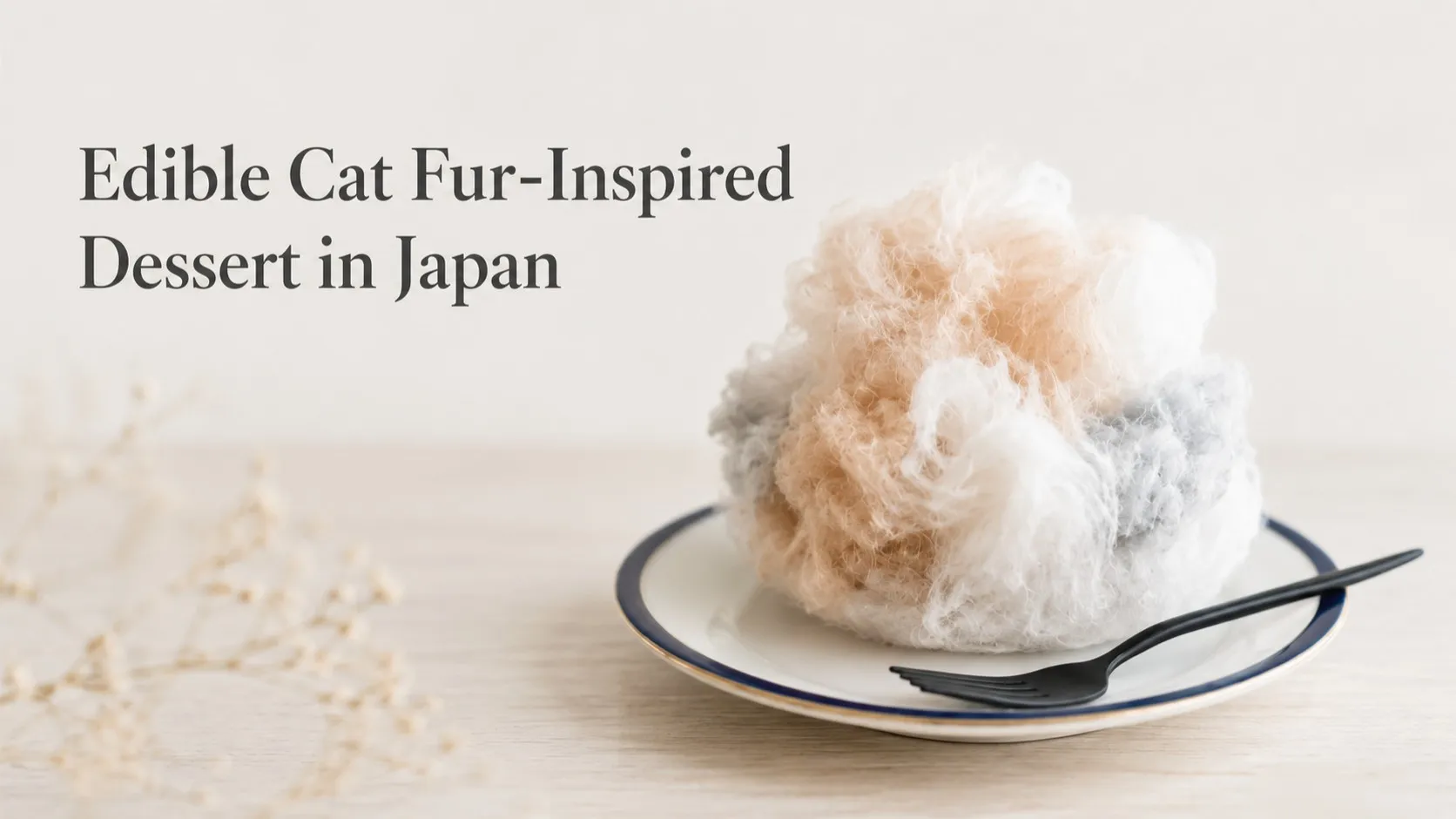
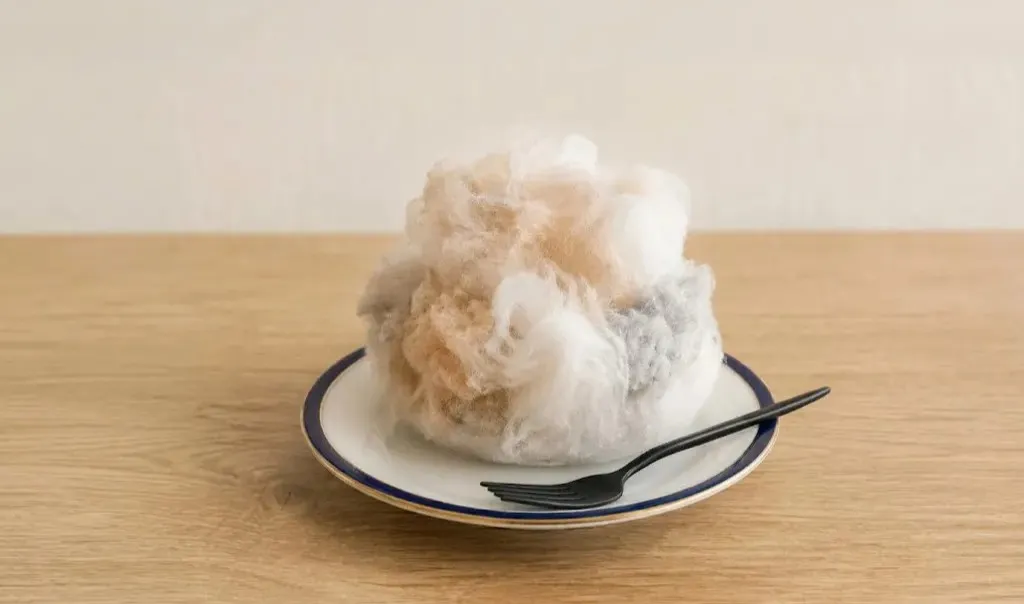
From the outside, it looks like an absurd product: cotton candy that resembles cat fur. But look a little closer, and it's not just a funny food; it's a small obsession that cat owners know all too well, turned into a product.
Cultural scene: The small rituals of living with cats
Anyone who lives with a cat knows: if there's a cat at home, fur isn't just fur.
It sticks to clothes.
It clings to the sofa.
It piles up on the floor.
It comes off the brush.
Sometimes it's annoying, sometimes it's oddly endearing.
Cat ownership isn't just about putting out food, cleaning the litter box, or buying toys. It's also about living with these small traces. Fur, paw prints, purrs, scratching, sleeping on the edge of the sofa, the quiet pressure early in the morning... All of these form the daily culture of living with a cat.
Necoichi's product picks one of the smallest and strangest pieces of this culture: the feeling of looking at a fur clump from the brush and not being able to bring yourself to throw it away.
This behavior might seem strange to an outsider. But for cat owners, it's a familiar feeling. Because that fur, even though it looks like waste, is a physical trace of the bond with the animal.
The product starts exactly from this trace.
How does the brand enter that scene?
Necoichi is already a brand in this space with cat accessories and cat lifestyle products. So the "edible cat fur" idea doesn't feel like an internet joke the brand picked up from the outside.
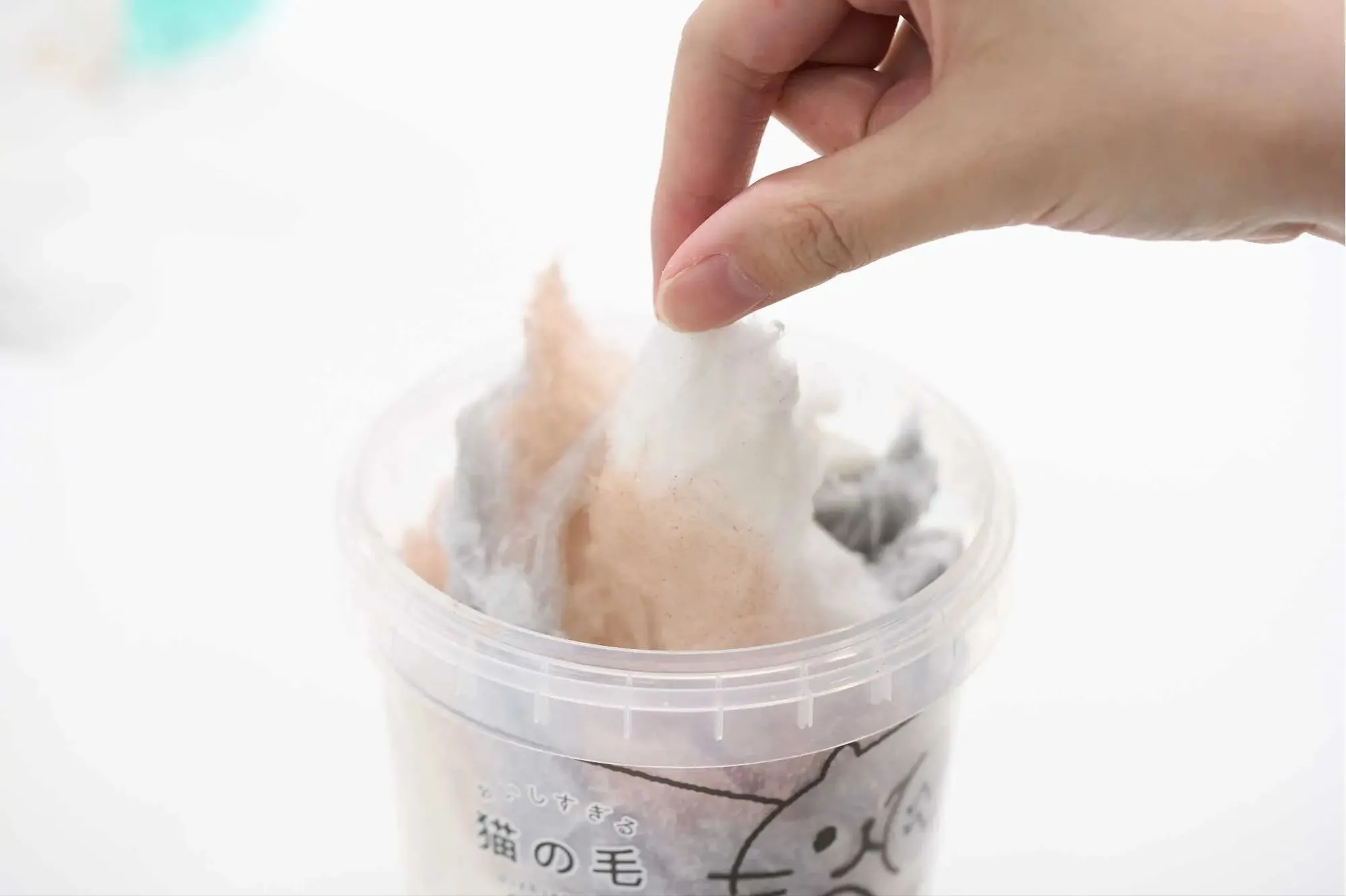
Visually, the product resembles a soft tuft of fur taken from the back of a calico cat. It's actually cotton candy. It's made to look like cat fur, but as a food, it offers a sweet and fun experience.
The color choice isn't random either. The final tone is inspired by the Japanese term "mike" used for calico cats. So the product doesn't just use a general cat idea; it taps into a specific visual memory that has meaning in Japan's cat culture.
This detail is important.
Because the product doesn't stay at the level of "a dessert that looks like a cat." It tries to approach the texture of fur that cat owners know, the color transition, and that slightly annoying but endearing feeling.
What does it get right?
What it gets right is that cat ownership isn't just about cute photos.
Cat culture often looks cleaner, sweeter, and more decorative from the outside. Cat illustrations, paw-print mugs, cute stickers, tiny figurines... These are the easy part.
Necoichi, on the other hand, looks at a more everyday and insider detail.
Cat fur doesn't normally seem like something to turn into a product. In fact, it's often seen as a problem that needs cleaning. But in the world of cat owners, fur isn't just mess. It shows the animal's presence in the home, its touch, its closeness, and the state of living together.
The product captures this dual feeling.
On one hand, it makes you say "this is a bit strange."
On the other, it gives the feeling that "only someone who lives with a cat can understand this."
That's why the idea winks at its own small community instead of explaining itself to the general audience.
How does it use without exploiting?
Many brands look at subcultures or niche communities from the outside. They take their language, objects, and jokes, but they can't fully read the feeling inside. When that happens, it quickly turns into a caricature.
The difference here is that the product amplifies a behavior cat owners already know, rather than making them look funny from the outside.
It doesn't say "look how strange these people are."
It says "we know this strangeness too."
That's a subtle difference.
The campaign doesn't just use cats as cute decor. It also brings in the small hassles of living with a cat. It connects something that could be a practical problem, like shedding, to the emotional side of cat ownership.
Plus, the physical experience of the product supports the idea. The lightness of cotton candy is close to the feel of fur. Its melting in the mouth completes the tactile and visual idea. The crunchy/popping candy effect inside takes the product from being just a photo-worthy object to a multi-sensory experience.
So the product isn't just "a dessert that looks like cat fur." It builds a small cat ownership fantasy through sight, touch, taste, and sound.
Why does the timing work?
The product's timing also supports the cultural reading.
The launch is placed around "Hug Your Cat Day." Such special days can sometimes feel like a forced calendar excuse for brands. But here, the product's theme and the day's feeling meet in the same space.
Hugging a cat naturally brings up the fur issue.
Hugging means contact.
Contact means fur.
Fur, here, becomes the product itself.
So the special day isn't just used as a social media hashtag. It provides a cultural foundation that carries the product's humor and emotion.
The product being sold in limited quantities at a specific store in Yokohama also fits the niche nature of the idea. It's not positioned like a mass-market candy that needs to be everywhere; it's a small experience that cat lovers would specifically want to go and see.
Lesson
This case shows that when a niche insight is handled correctly, it can create widespread curiosity.
Work that tries to appeal to everyone often doesn't fully resonate with anyone. Necoichi's work, on the other hand, starts from a very narrow place: the strange but familiar relationship cat owners have with fur.
That's why the product looks odd but doesn't feel empty.
It takes a culturally established area of love.
It picks a small behavior from within the community.
It amplifies it without caricaturing it.
Then it turns it into a real product.
Here, the brand doesn't stand out too much. Cat love is at the center of the stage. The brand catches one of the byproducts of that love and objectifies it.
This is one of the basic lessons of cultural work:
Understanding a community isn't about taking its most visible symbol. Sometimes it's about reading the small traces that community leaves at home, on the brush, on clothes, and on the floor.
Necoichi's "edible cat fur" idea does exactly that.
It doesn't polish cat love.
It turns its shedding, trace-leaving, slightly strange but authentic side into a product.