Spring 2011. A time when Facebook hadn't yet been joined by everyone's mom, and brands were just starting to murmur, "We need to do something on social media." Henkel's 60-year-old dish soap brand, Pril, wanted to rejuvenate. It had a "cult brand" on its hands: a history stretching back to the 1950s, the slogan "Willst du viel, spül mit Pril" that everyone in Germany knew by heart, and the legendary Pril flowers that had spread to refrigerators and school notebooks in the 70s.
The idea was flawless on paper: "Mein Pril – Mein Stil" (My Pril, My Style). With an online design tool created by Hamburg-based creative agency Neteye, anyone could design their own Pril bottle — bottle color, cap, label, decorations. The public would vote, the top 10 designs would make it to the finals, a jury would select 2 from those 10, and the winning designs would actually be produced and hit store shelves across Germany by the end of the year. Participation exploded: over 35,000 designs were uploaded in no time.
Then the internet remembered it was the internet.
Here comes the chicken
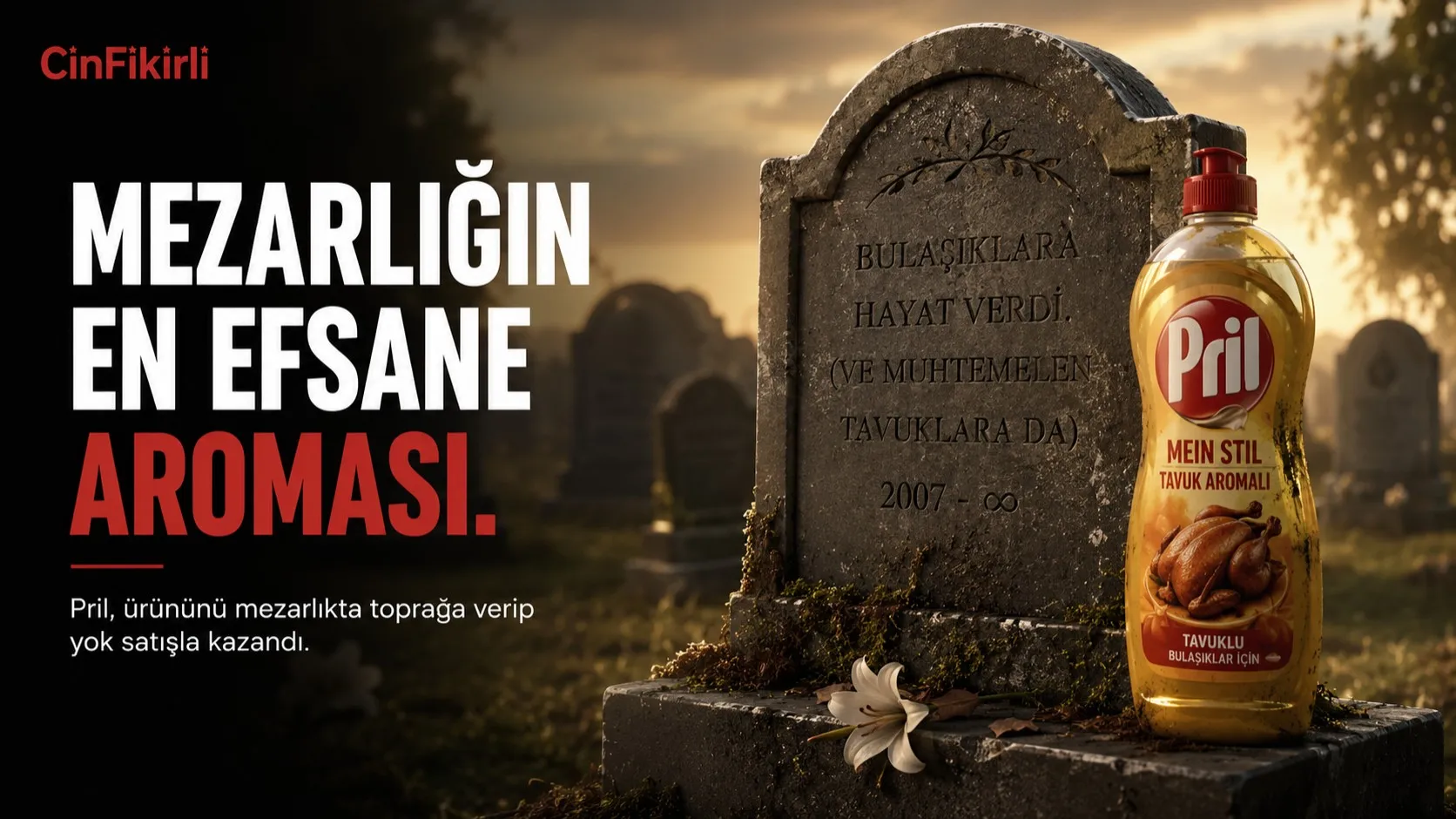
Copywriter Peter Breuer found the flood of floral and butterfly designs in the gallery boring, so he uploaded his own "design" to the tool: a brown bottle with a hand-drawn grilled chicken on it and the caption — "Schmeckt lecker nach Hähnchen!" That is: "Delicious chicken flavor!"
For a dish soap.
Breuer shared the design link on Twitter, and the snowball started rolling. The chicken bottle shot to first place in the voting, beating its closest competitor by about 3,000 votes. Imitations followed: bottles reading "Now with fresh pretzel scent!" deliberate ugly doodles, absurd slogans. Within days, the top ranks of the gallery turned into a troll art exhibition. In later interviews, Breuer said it wasn't a protest against Henkel — he'd read the rules and knew he had no chance of winning. He just found the whole thing funny. The most dangerous kind of internet troll: not malicious, just having fun.
The brand's fatal move
Up to this point, no one was really hurt. Quite the opposite: a detergent contest no one was talking about suddenly became the top topic in Germany's digital agenda. Some commentators even wrote at the time: "The chicken bottle is the best advertising Henkel could have bought for this contest."
Henkel also had a safety net: according to the rules, the winner wasn't chosen by the public but by a jury — the Pril marketing team plus a fan selected from Facebook. The jury's "brand image suitability" criterion was written in from the start. All the brand had to do was smile, let the process run its course, and announce a graceful jury decision on the final night.
Instead, Henkel panicked. While the contest was still running, the rules were tightened, troll designs were scrubbed from the gallery, and rumors spread that the brand had tampered with the voting under the guise of "vote manipulation." When the results were announced, the picture was damning in the community's eyes: the winning designs were among the ones with the lowest votes among the finalists. The brand looked like it had set up a game, didn't like the outcome, and flipped the table.
That's when the funeral started. The backlash wasn't aimed at the chicken bottle; it was aimed at the brand that said "your voice matters" and then muted it. What the literature calls "crowd resistance" kicked in: the moment the community felt deceived, it turned the campaign itself into a target. Pril became the cautionary slide in social media marketing classes titled "How Not to Do Crowdsourcing" — and it hasn't left that slide in 14 years.
The brand that passed the same test: Otto
What makes this death truly tragic is that the right answer had been given just six months earlier, in the same country, for all to see. In November 2010, German retail giant Otto launched a model contest on Facebook. Who won the vote? A business student named "Brigitte" who had thrown on a blonde wig and a half-hearted woman's disguise.
What did Otto do? It smiled. The photo shoot invitation actually went to "Brigitte." The internet embraced Otto, the incident closed as a charming story, and today no one remembers the Otto case as a "crisis."
Same country, same platform, same troll reflex. The only difference: one joined the joke, the other sued it.
Three lessons at the graveside
1. Crowdsourcing is not a survey; it's a stage. When brands say "let's ask the public," they usually want confirmation of the answer they already have in mind. But the internet, once on stage, puts on its own show. You can't set up a stage and force a script; either you trust the show or you don't set up the stage at all.
2. Rule architecture is written before the crisis — and never changed mid-game. The irony is that Pril's rule architecture was solid: jury decision, image criteria, everything was in writing. What killed the brand wasn't a lack of rules, but its failure to trust its own rules and its decision to move the goalposts mid-match. Changing the rules doesn't solve a crisis; it admits one and makes it bigger.
3. A troll is a zero-budget media channel you cannot control. The chicken bottle earned Pril millions of impressions — for free. Brands see trolls as a glitch to be silenced; but when read correctly, a troll is the campaign's highest-reach creative partner. The question to ask isn't "how do we delete this?" but "how do we respond to this?"
Would it have happened in Turkey?
It would have, and it did — just in other forms. The Turkish internet plays in the world league when it comes to trolling public votes: from TIME polls to name contests, from "vote for your flavor" campaigns to competition program SMS lines, we've seen this reflex countless times. If a brand in Turkey today said "design your own bottle, let the public vote," a local version of the chicken bottle would appear within 24 hours. The only thing that would make a difference is whether the brand acts like Henkel or Otto in that moment.