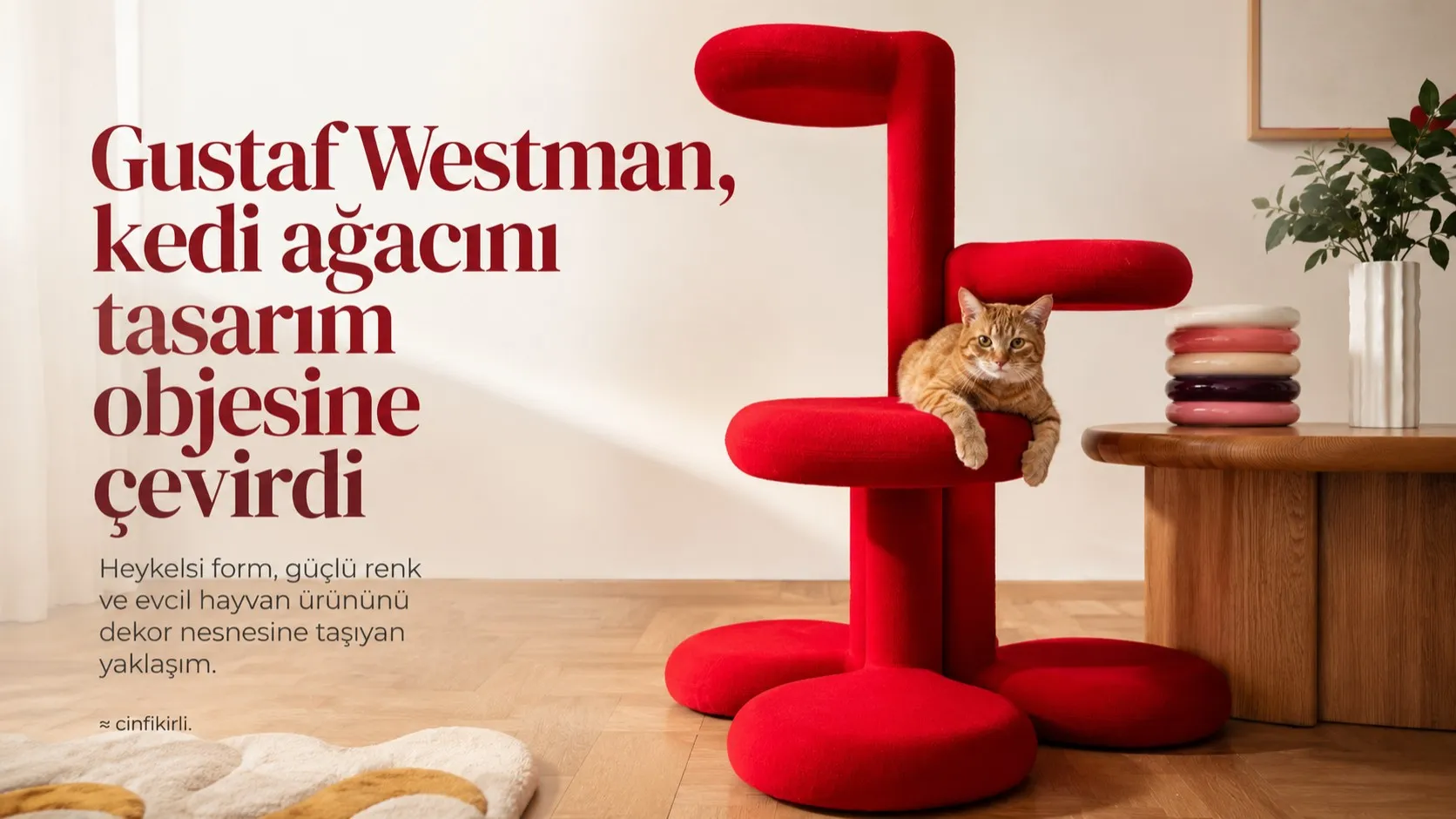
Swedish designer Gustaf Westman has taken the cat tree—often something people want to hide away—and turned it into a visible design object.
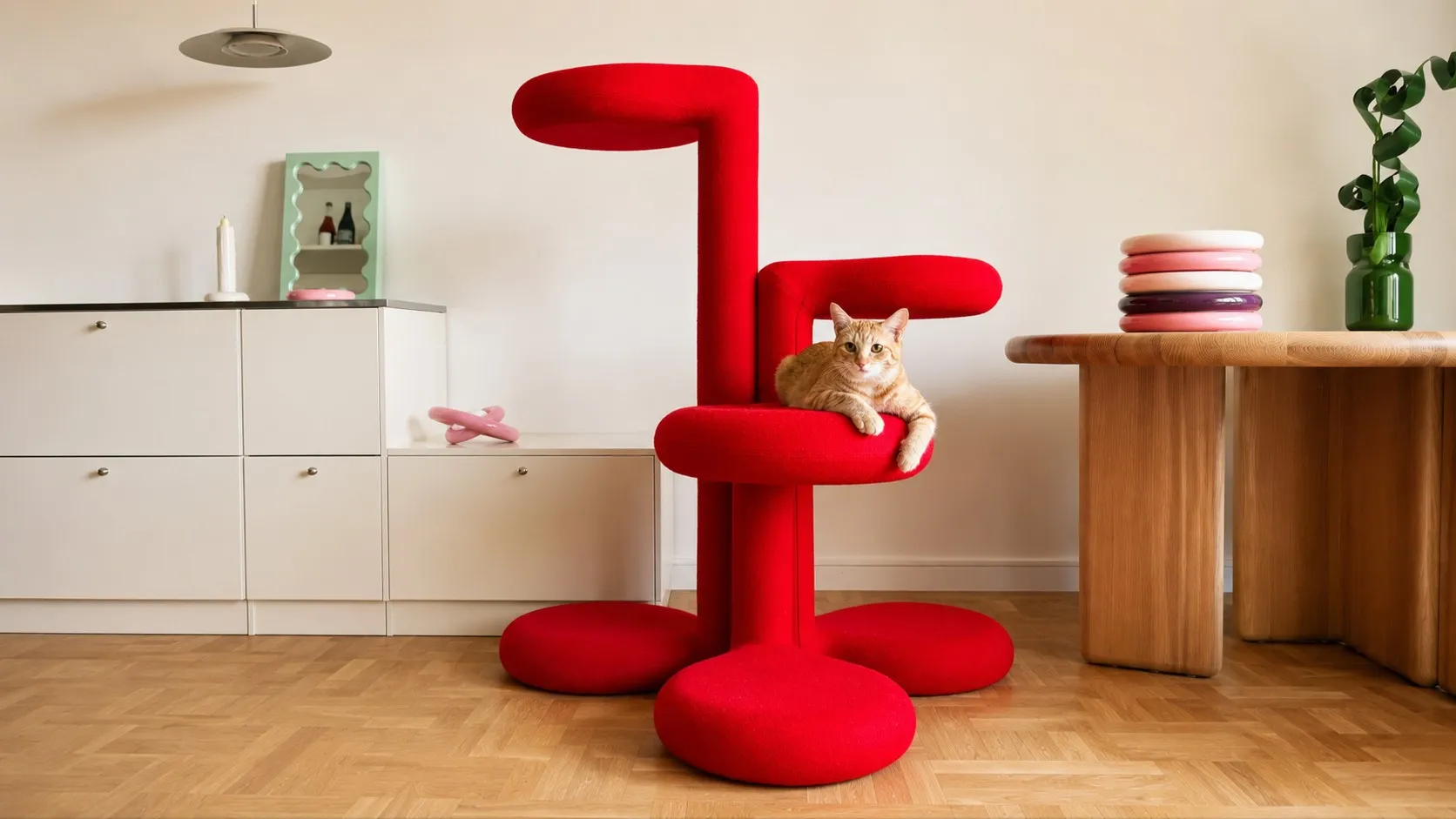
The new piece, called “Chunky Cat Tree,” brings Westman’s signature design language of chunky volumes, rounded edges, and vibrant colors to pet furniture. While cat trees are typically seen as functional but visually low-key products, this design turns them into decorative pieces that can stand proudly in the middle of the living room.
The starting point for the project is simple: Westman says he got tired of the visually weak cat trees on the market. So he set out from the idea that a product meeting cats’ needs for climbing, resting, and playing could also be an aesthetic object for humans.
Chunky Series Extends to Cat Furniture
Chunky Cat Tree is designed as a continuation of Gustaf Westman’s Chunky collection, which previously expanded with mugs, glasses, vases, coffee gear, stools, and planters.
The design also echoes the Blob Sofa introduced in 2023. Stacked volumes, soft lines, and bold color blocks adapt Westman’s recognizable visual language to a piece of furniture made for cats.
This approach positions the cat tree not just as a pet accessory, but as a design object that’s part of the interior. While offering climbing and lounging spots for cats, it also creates a decorative form for the human eye.
Function for Cats, Decorative Form for the Home
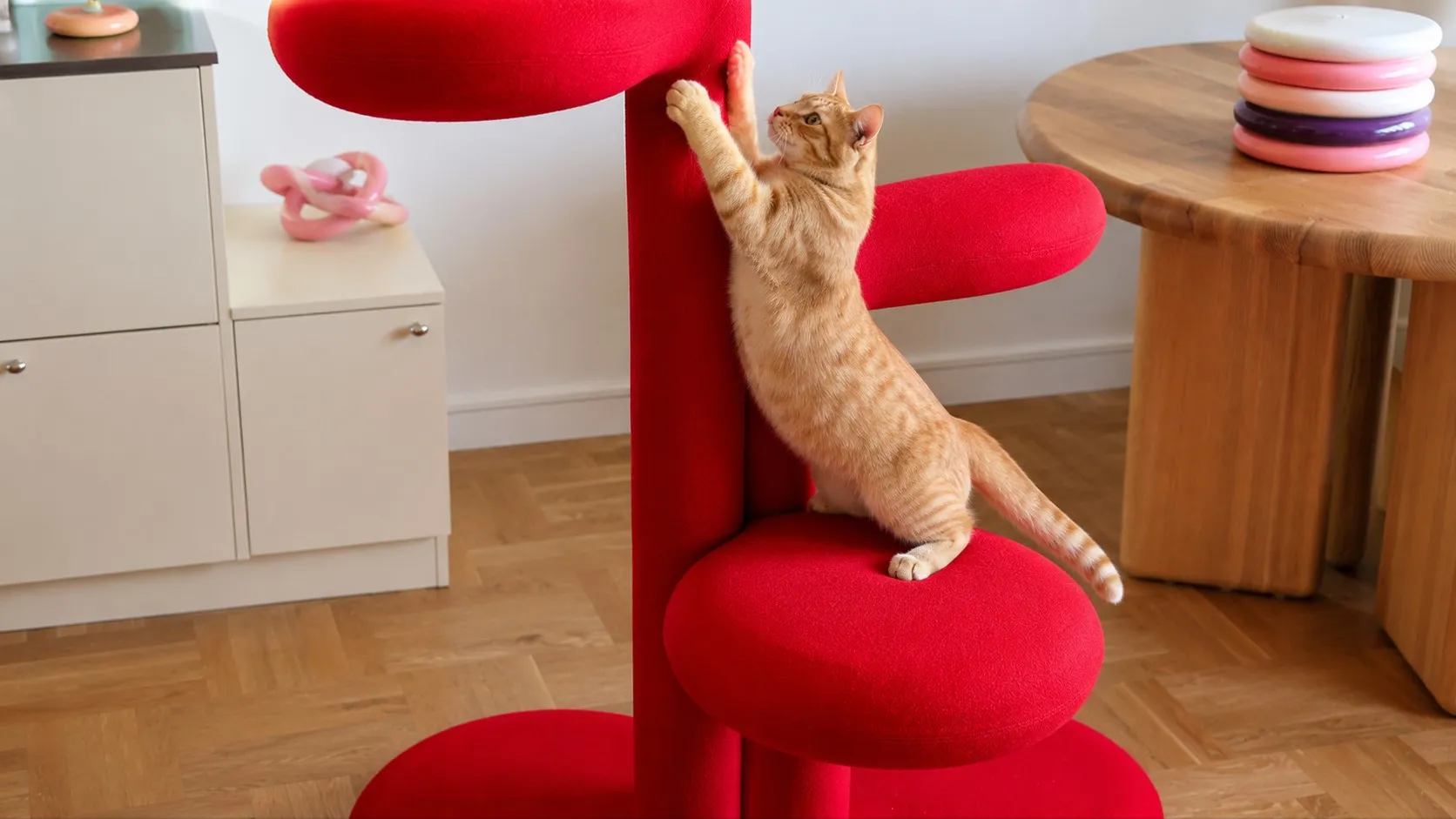
Chunky Cat Tree consists of platforms at different heights set on a three-legged base. This structure creates climbing and resting areas that multiple cats can use at the same time.
The product is made to order in Sweden. Offered in color options like red, yellow, purple, blue, and cobalt blue, the design continues Westman’s colorful and voluminous world.
The common approach in cat furniture is often to hide the product or make it as invisible as possible in the space. Westman does the opposite. Chunky Cat Tree is designed not like an accessory that needs to be hidden, but like a piece of furniture that shows itself in the home.
In this way, the work shows that pet products can respond not only to practical needs but also to the visual integrity of living spaces.
Design Language in Pet Furniture
In recent years, pet products have started to be treated as part of interior design, moving beyond just functional accessories. Cat beds, food bowls, climbing units, and carriers are now designed to be more harmonious with the overall aesthetic of the home.
Chunky Cat Tree is a striking example of this trend. While offering a structure that supports cats’ natural behaviors, it also establishes a formal language consistent with the designer’s existing collection.
Westman’s work shows that a product category often seen as aesthetically weak—like the cat tree—can be reimagined from a design perspective. Chunky Cat Tree takes pet furniture from being an accessory pushed to the corner of the living room and makes it a visible, characterful part of the space.