What does a brand do when entering a new city? Put up ad panels, rent billboards, maybe launch a digital campaign. Uber Eats, on the other hand, wrapped an entire city in a delivery bag.
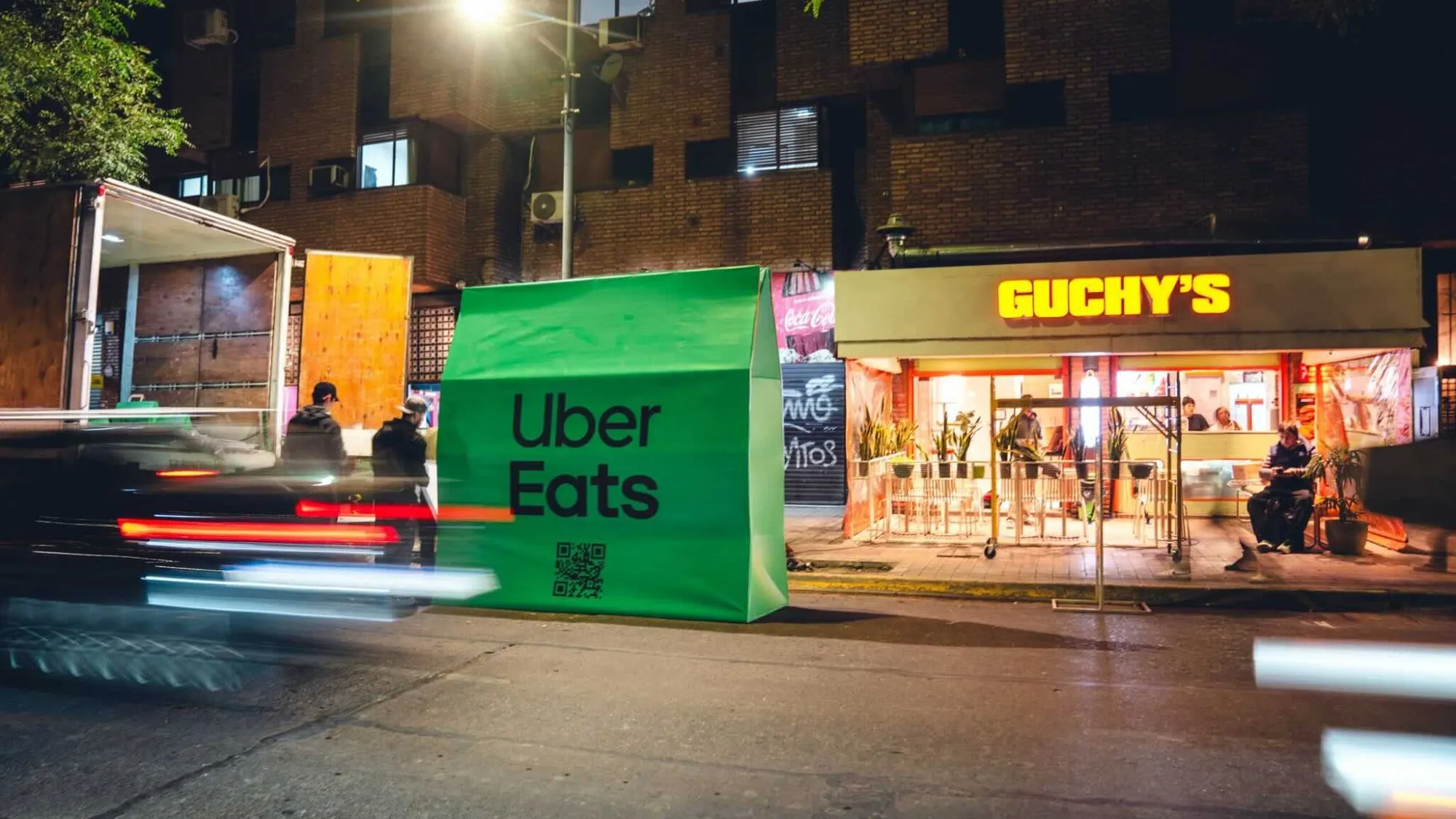
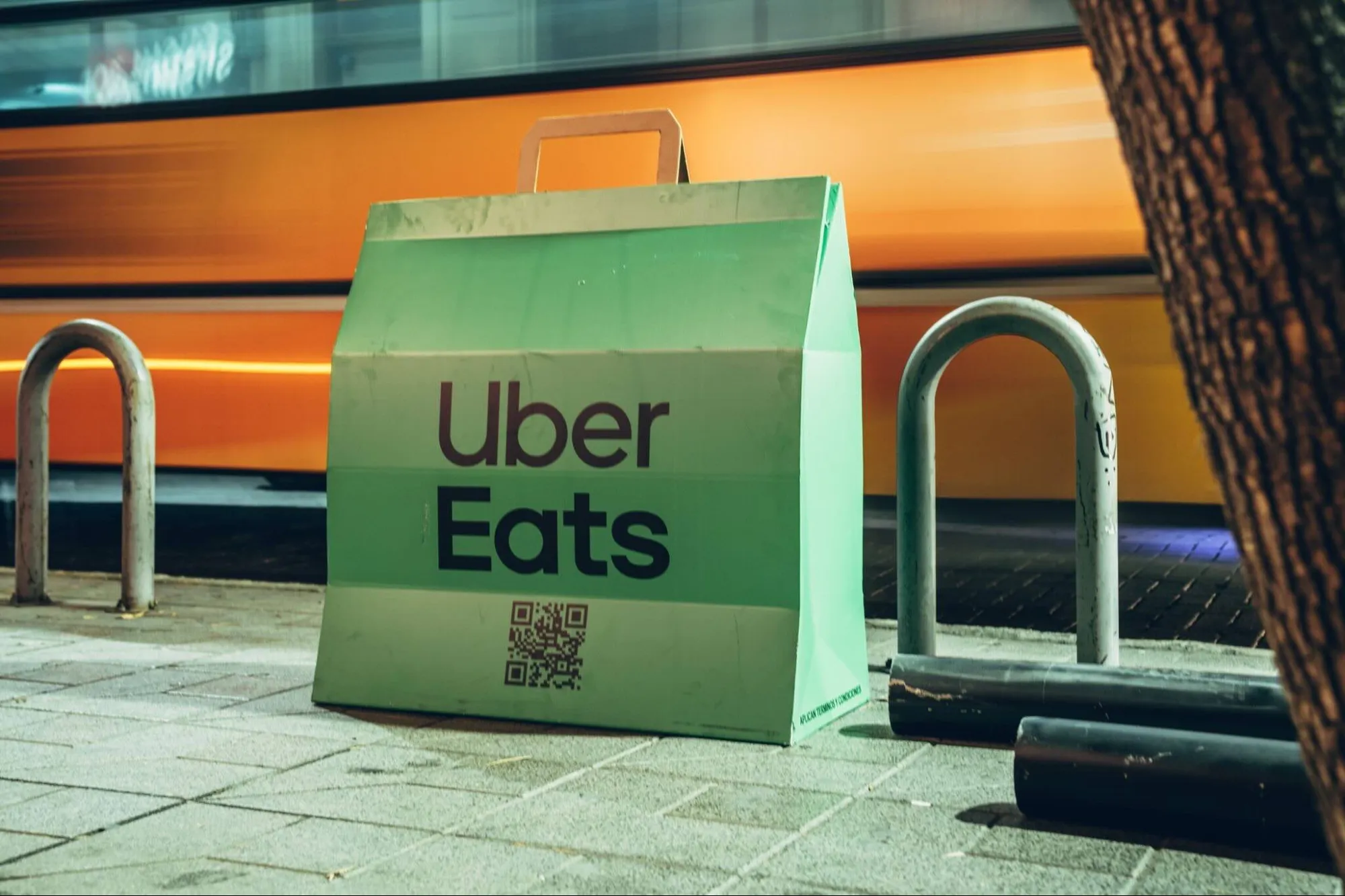
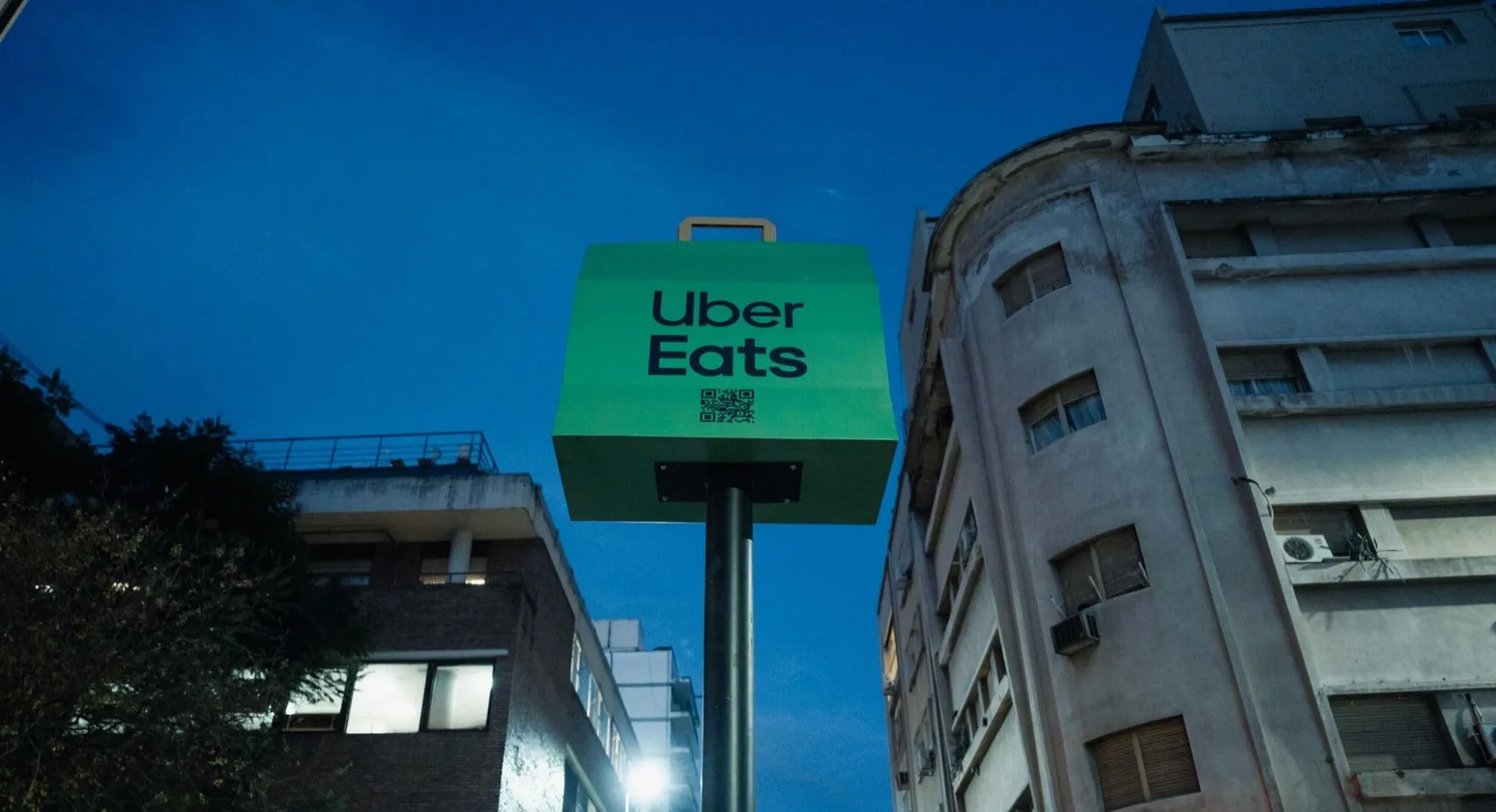
As they entered Córdoba, Argentina, the team working with Wieden+Kennedy Argentina must have thought: "We're a delivery app. So let's put the city itself in our delivery bag." And they really did cover the facades of the city's most popular restaurants with giant Uber Eats bags.
Now imagine this: You're walking down the street to get your morning coffee, and you see a giant turquoise bag over your favorite spot. No restaurant logo, no name. Just Uber Eats. What's going on?
Redefining the Definition of Ambient Marketing
Don't mistake this campaign for an ordinary ambient marketing case. Yes, it transforms an existing structure (a restaurant facade) into a medium. But the real point here is this: The brand turns the physical world into an extension of a digital service.
Each giant bag has a giant QR code on it. Passersby pull out their phones, scan it, and are directed straight to an Uber One membership. So what you see on the street isn't an ad—it's an invitation. A call. "Come, try it."
As creative directors Mathias Harbek and Yago Fandiño said: "We wanted the city itself to be the ad." And that's one of the most powerful narratives a brand can use when entering a city.
So Why Does It Work? Three Reasons
First, the bridge between physical and digital. The campaign isn't just a visual show. Each bag is a conversion funnel. The QR code cuts the transition from street to app down to seconds. How many billboards can say that?
Second, the ownership strategy. By covering the physical presence of restaurants with its own brand, Uber Eats sends the message: "Every delicious spot in this city is now accessible through me." It borrows the restaurants' reputation and transfers it to its own brand.
Third, scale. Wrapping one restaurant in a bag is easy. But wrapping all the city's key restaurants at the same time... Now that's a market entry strategy. Everyone talks. Everyone takes photos. Everyone shares.
Would It Work in Turkey?
If I didn't ask this question, it wouldn't be CinFikirli. The answer: Yes, but you'd need to make a deal with the municipality. Imagine a neighborhood in Istanbul, say Kadıköy. Wrapping the cafes in Moda, Çiya, Kanaat Lokantası in giant bags...
Of course, the obstacle in Turkey is bureaucracy and permits. But if a brand could pull this off, the impact would be massive. Because Turkish consumers love visual spectacles. Especially when combined with a message like "Istanbul's best restaurants are now at your home"... Then it really gets talked about.
For Uber Eats to run such a campaign in Turkey, it might first need to partner with a local brand. But the idea is solid.
A Lesson to Take from the Campaign
This case shows us this: Brands no longer just advertise. They weave into the fabric of a city, transform it, live with it. Uber Eats entered Córdoba not as an app, but as a city dweller.
What does your brand do when entering a new market? Does it hang a billboard, or does it wrap the city itself?