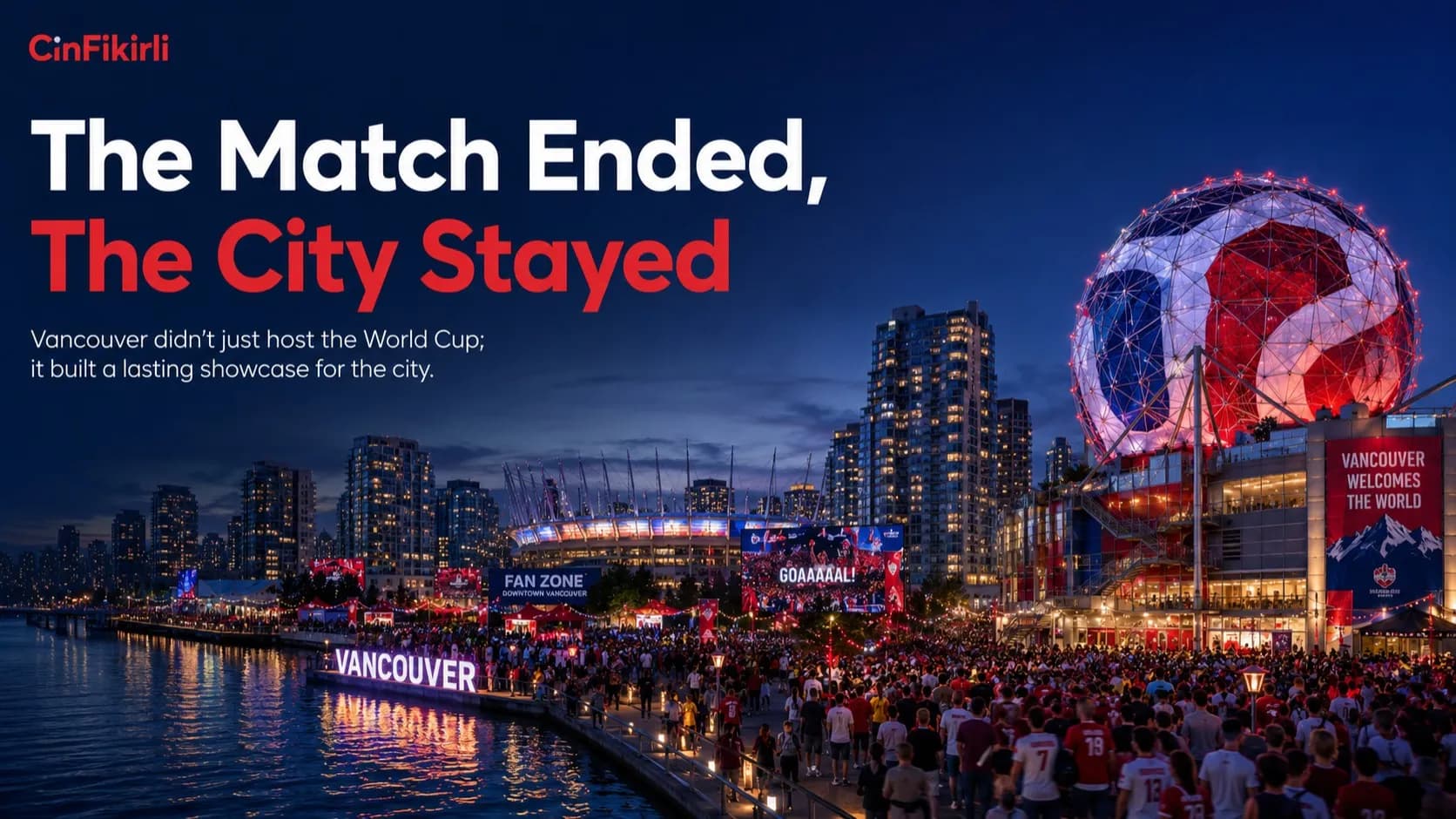
The World Cup matches in Vancouver are over. But the city's communication with the tournament doesn't end with the final whistle.
BC Place hosted seven matches during the 2026 World Cup. Fan marches, broadcasts in city squares, football-themed boats, a summit viewing event, and the Science World dome transformed into a giant soccer ball brought the tournament beyond the stadium.
Now, the city is working to turn a few weeks of global visibility into a longer-term tourism and destination narrative.
Seven-match hosting spread across the city
Vancouver's World Cup program wasn't built solely around BC Place.
On match days, fans from different countries walked from the city center to the stadium. Celebrations continued in busy areas like Granville Street after the matches. The FIFA Fan Festival, Canada House, and viewing areas at various points around the city allowed visitors without tickets to join the tournament atmosphere.
The compact city center created a natural connection between the stadium, waterfront, accommodations, restaurants, and entertainment districts. Locals, visitors, players, and team staff all mingled within the same urban fabric.
Vancouver's tournament communication also leveraged this physical proximity. Football was embedded into the city's daily rhythm rather than cordoned off into a separate event zone.
Science World transformed into a giant soccer ball
One of Vancouver's most visible initiatives during the tournament was carried out on the dome of the Science World building.
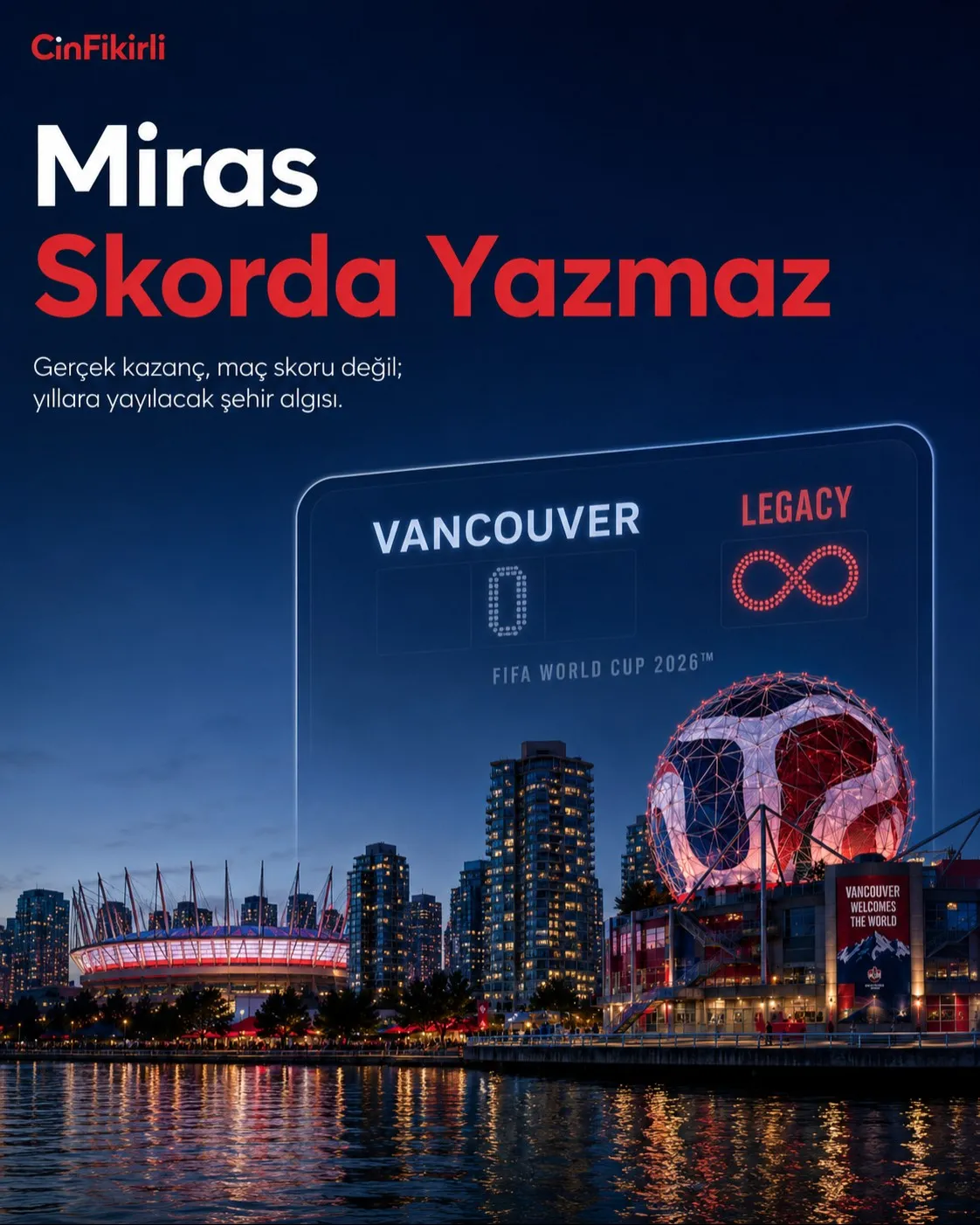
The 40-meter-diameter geodesic dome on the shores of False Creek was transformed into a 360-degree replica of the tournament's official match ball, Trionda. The installation, called "The Beautiful Dome," was completed in about four weeks using 131 custom panels.
Science World's location opposite BC Place placed the structure naturally in the background of both match broadcasts and city views. The dome was frequently seen in TV shots, fan videos, and social media posts.
The project was featured in over 100 international media outlets and shared on the tournament's official social media accounts.
The installation didn't just add decoration around the stadium. The structure, built for Expo 86 and later becoming one of the city's icons, connected Vancouver to another global event era.
Goal nets turned into hammocks
One of the projects the city is carrying into the post-tournament period is called "Hammock Goals."
Under this project, soccer goal nets—including those used in World Cup matches at BC Place—are being turned into hammocks. These hammocks are being placed at the FIFA Fan Festival, Granville Island Watch Party, and various relaxation spots around the city.
The initiative is part of a broader destination narrative called "Recouver in Vancouver." The idea combines the intensity the World Cup created for players and fans with Vancouver's identity of nature, relaxation, and the outdoors.
Forty-eight teams participate in the tournament, and only one leaves with the trophy. The project links the sense of defeat and fatigue of the remaining 47 teams with the city's promise of rest.
After the tournament, there are also plans to send the hammocks to the football federations of some countries that played matches in Vancouver. This way, a physical piece used in the match becomes a souvenir from the host city.
Common visual system prepared for local businesses
Vancouver's World Cup communication wasn't limited to large-scale initiatives by central institutions.
A common visual system called "Home Turf Toolkit" was prepared to allow businesses, communities, and event organizers in the city to participate in the tournament. The system included color palettes, graphic elements, ready-made templates, and message suggestions.
Due to restrictions on using FIFA-owned names, logos, and visual assets, it wasn't easy for local businesses to directly tap into the official tournament identity. The toolkit allowed businesses to create football-themed communication in compliance with these rules.
Restaurants, shops, tourism businesses, and local organizations could thus announce their own events with a cohesive visual language.
This effort ensured that tournament visibility across the city wasn't limited to sponsors and official event areas.
Events consolidated into a single calendar
A shared World Cup calendar was created for viewing events, celebrations, and brand activations held throughout the tournament.
Businesses and communities could add their own programs to this calendar. Visitors could track match screenings, fan meetups, and various football events across the city through a single guide.
The calendar also aimed to prevent the concentration of activity solely around the stadium or a few central areas. Businesses and community spaces in different neighborhoods gained a visibility zone where they could share in the movement generated by the tournament.
Initiatives like equipping the city's aquabus boats with giant soccer balls and holding a viewing event on Grouse Mountain were also part of this widespread city participation.
Cityscape became part of the broadcast identity
Vancouver's global visibility during the tournament didn't come solely from the activations prepared.
BC Place's location in the city center naturally brought views of False Creek, the North Shore mountains, and the coastline into broadcasts. The open-air broadcast studio at Jack Poole Plaza used the sea and mountain backdrop.
Some viewers thinking these images were AI-generated sparked additional conversation about the scenery on social media.
Instead of reproducing these images in a separate ad set, the city's communication used them as the natural backdrop for live broadcasts. Thus, football matches were shown alongside Vancouver's city center, waterfront, and mountains.
Fan experience tied to tourism narrative
Some sporting moments in the city became part of Vancouver's destination memory.
Australia beating Turkey in the tournament's opening match, Egypt winning its first World Cup victory in Vancouver, and Switzerland playing qualifying matches in the city paired Vancouver with specific football moments for fans from different countries.
Players and their families visiting tourist spots in the city also expanded the tournament narrative beyond the stadium. The Vancouver Aquarium, Granville Street, and various downtown locations appeared in daily posts by athletes and fans.
This visibility emerged differently from a classic tourism ad. The city was recorded not just as the backdrop where matches were played, but as the place where football stories unfolded.
Too early to assess economic outcomes
The total impact of Vancouver's seven matches on visitor numbers, hotel occupancy, and the local economy has yet to be finalized.
Initial feedback from the tourism sector shows the impact wasn't evenly distributed among businesses. Some saw unusual demand, while others experienced a quieter period.
City officials and tourism organizations note that the tournament's real impact can't be measured solely by spending during match weeks. Global broadcast visibility is expected to translate into vacation bookings, convention choices, and new major events in the coming years.
Therefore, the World Cup's contribution to the city's brand isn't assessed by a single visitor or revenue figure that emerges as soon as the tournament ends.
City branding work continues after the tournament
Vancouver has previously hosted global events like Expo 86, the 2010 Winter Olympics and Paralympics, and the 2015 Women's World Cup.
The 2026 World Cup is positioned as the latest link in this event history. However, the city's main goal is not to leave a few weeks of visibility as just a memory of a successful organization.
The Beautiful Dome brought a city landmark into football broadcasts. Hammock Goals gave new function to used goal nets. Home Turf Toolkit enabled local businesses to participate in tournament communication. The shared event calendar spread football activity to different parts of the city.
The last match in Vancouver was played on July 7. While the tournament continues in other cities, the host city's focus is now shifting to how this visibility will pay off in terms of tourism, events, and city reputation in the years ahead.
The final whistle has blown at the stadium. But Vancouver's city narrative built through the World Cup continues.