KFC is focusing more on the box than the chicken to tell the story of its new Boxfull value menu.
Following the brand's "Go Full Chicken" platform, the campaign avoids treating the Boxfull menu like a standard product launch. Instead, it hinges on the question of whether the box can actually hold that much chicken.
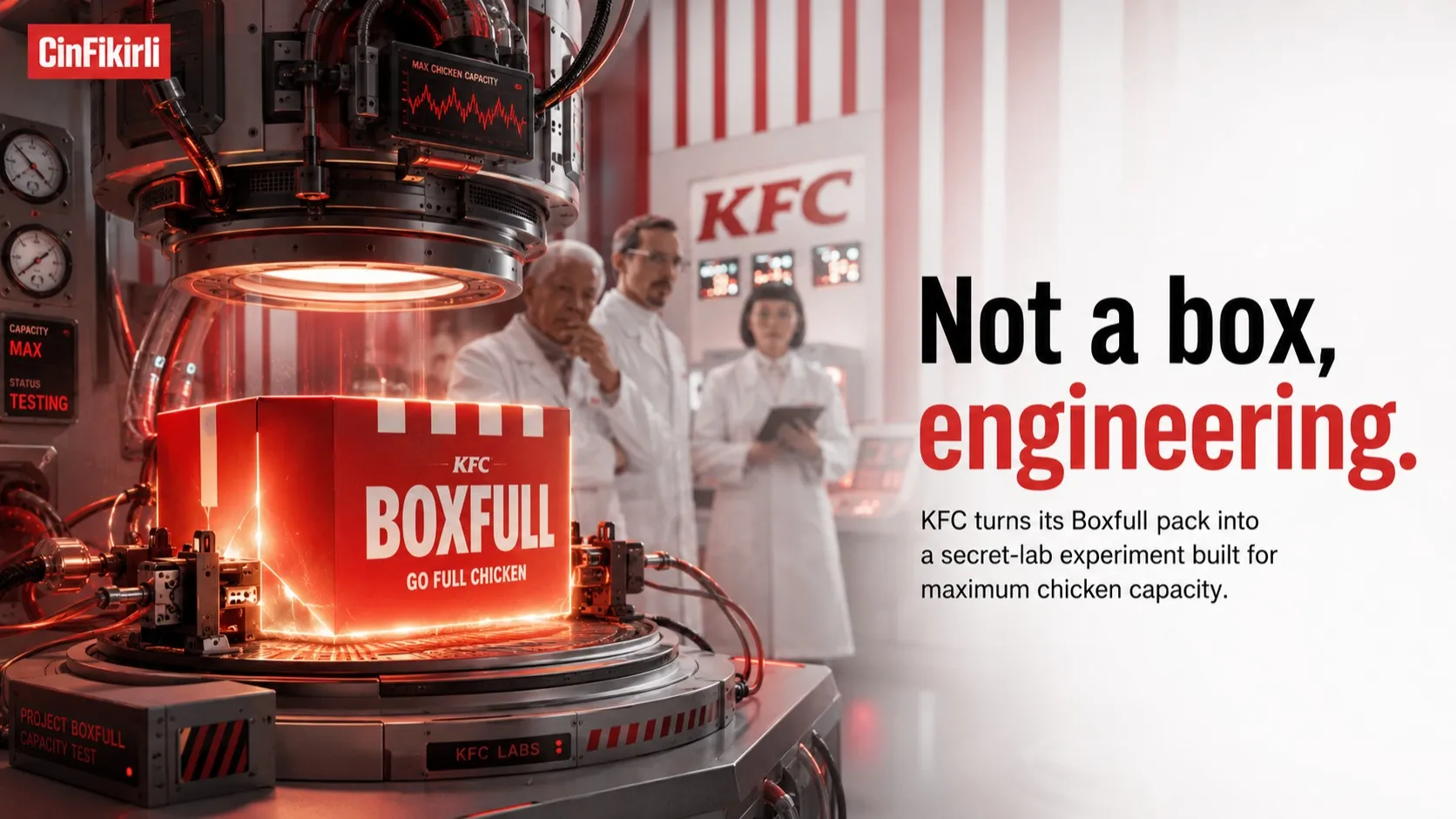
The idea deliberately starts from an absurd place: KFC's new menu is so packed that you can't trust just any ordinary cardboard box with this much chicken. It requires a secret box lab, tests, and a technical team that takes its job way too seriously.
That's where the campaign's main stage comes from: the "Secret KFC Box Lab."
A lab setup for Boxfull
The campaign rolls out through a series of films introducing KFC's new Boxfull value menu. These films show teams working in a secret KFC box lab.
The lab's mission is to develop the perfect box capable of holding an excessive amount of chicken. Boxes are tested, their durability under pressure is measured, and the team treats the whole thing like a technical engineering problem.
The narrator of the films is a character named Ingvar, positioned as the "Head Box Technologist." His overly serious tone is one of the main elements driving the campaign's humor. He talks about box durability for a chicken-filled menu as if it were almost a scientific matter.
This approach, instead of stating the product message directly and dryly, ties the value menu's generous contents to an indirect comedic idea.
Product promise: more chicken, more value
Boxfull is positioned as a new menu series from KFC that combines fan-favorite items with a more compelling value perception. The "too much chicken" narrative at the heart of the campaign is used to amplify this product promise.
Rather than saying "there's a lot in this box," the brand builds a story around whether the box can even withstand this abundance.
This way, the product promise isn't told solely through price and ingredient lists. The box becomes the central visual metaphor representing the menu's feeling of fullness.
In fast food communication, value menu storytelling is often limited to price, portions, and promotional language. Here, KFC takes the same information and turns it into a more entertaining narrative. The product is communicated not through a direct discount message, but through the idea of "maximum chicken capacity."
A continuation of the "Go Full Chicken" line
The campaign is designed as a continuation of KFC's "Go Full Chicken" brand platform.
This platform is built on the brand's obsessive commitment to chicken and its claim of doing things right. The Boxfull campaign extends this line into the value menu space.
The logic here is: if KFC is going to offer a value menu, it should do it in a way that fits the "full chicken" idea. So the box isn't just packaging; it becomes part of the brand's exaggerated seriousness about chicken.
That's why "Secret KFC Box Lab" doesn't feel like an independent ad gag; it works as a related follow-up to the brand's new platform. The chicken obsession this time expands from the product itself to its packaging.
Humor built around the box
What's striking about the campaign is that it brings a usually background element in the fast food category to the forefront.
Normally, the box is just a carrier. It protects the product, makes it easy to hold, and often goes unnoticed. KFC, however, puts this invisible part at the center of the story.
To describe the amount of chicken in the new menu, it generates humor through the box's helplessness, durability, and technical limitations.
This choice makes the product message visible without shouting it directly. Instead of the phrase "more chicken," the question "can this box hold this much chicken?" sticks in your mind.
That's where the campaign's joke lies: a fast food box is being tested as if it were space technology or a heavy industrial product.
Launched as an integrated campaign
The Boxfull campaign isn't limited to just a series of films. It was launched as an integrated structure adapted to different channels like television, digital, social media, influencer collaborations, radio, and out-of-home advertising.
Each channel carries the "secret box lab" idea at different scales. While the character and lab world stand out on the film side, shorter, more shareable pieces of this absurd scientific tone are used on social and digital channels.
On channels like out-of-home and radio, the campaign's main message is simplified for quicker understanding: Boxfull is a KFC menu so full it pushes the box's limits.
No sales, reach, or performance results for the project have been shared. The campaign is positioned as the launch communication for the new product series.
Telling the value menu story with an idea, not a product list
KFC's Boxfull campaign breaks away from the common patterns seen in value menu advertising.
Price advantage, item count, and portion size are still at the core. But instead of listing this information directly, the campaign ties it all into a single humorous proposition: the box carrying this much chicken must be specially developed.
This approach shows how a simple product message in the fast food category can be told by building a small world.
The box stops being just packaging.
It becomes a character describing the menu's abundance.
The lab becomes the stage that amplifies the product promise.
With Boxfull, KFC looks at the box, not the plate, to tell the story of chicken quantity. That's where the campaign's difference lies.