Everyone asks for help when moving.
But not everyone wants every box opened.
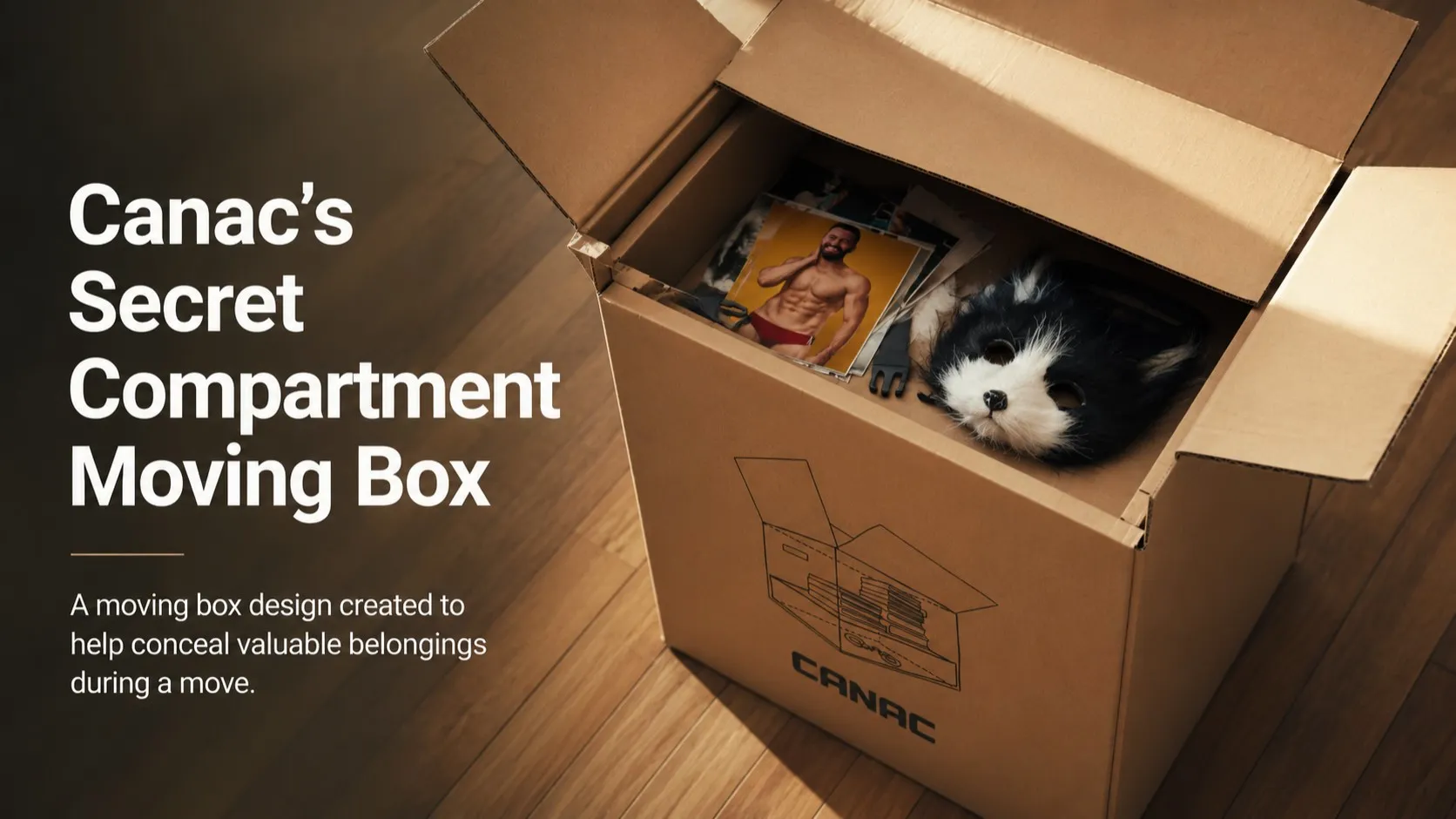
Canac's "La Boîte Secrète" idea, created in Quebec, comes from this very tension. The box looks like an ordinary moving box from the outside, but it has a hidden second section underneath. The top part is for things like towels, pots, and kitchen utensils—items that are fine for anyone to see. The bottom section is reserved for more personal, private items that you don't want falling into someone else's hands.
The strength of the campaign doesn't come from a grand claim, but from a very familiar moving moment.
Family, friends, neighbors, or relatives have come to help. Boxes are being moved. Some get opened. Some get mixed up. Right at that moment, something that shouldn't be seen might end up in the wrong hands.
Canac doesn't just turn this uncomfortable possibility into a joke; it transforms it into a product that actually works.
What's the case?
In Quebec, July 1st isn't just a quiet day on the official holiday calendar. It's also a major moving day. Because many lease agreements end around the same time, people move houses on the same days, ask for help from relatives, and the city experiences an intense moving frenzy.
Canac seizes this cultural moment.
The brand picks a small but powerful problem people might actually face during moving season: private belongings becoming visible during the move.
To solve it, instead of a classic campaign visual or just a funny film, they produce a physical product. "La Boîte Secrète," or the secret box, keeps the appearance of an ordinary moving box but carries a second, unnoticed area at the bottom.
This way, while the top part of the box is filled with normal items, the bottom section provides a hidden space for personal belongings.
The campaign is also supported on the digital side with video content and influencer posts. These contents humorously describe the embarrassing moments that can happen during a move and show how the box prevents them.
Where does the idea work?
The idea works on three points.
First, the product solves a real problem.
The privacy issue during moving season doesn't feel like a made-up advertising problem. The moment when people helping out carry boxes, some boxes accidentally get opened, and private items end up in plain sight already exists in everyday life.
Second, the medium and the product become one.
Here, the campaign's carrier isn't just the ad film. The product itself tells the idea. When you see the box, you don't need a long explanation to understand the campaign. The secret compartment is the idea itself.
Third, the brand steps into a fun space without leaving its own territory.
Canac is a home improvement chain. Moving, home organization, repairs, boxes, equipment, and practical solutions are all within the brand's natural domain. So the work doesn't awkwardly attach itself to a pop culture topic the brand has nothing to do with.
Moving is already a space Canac can talk about. The brand simply finds the less discussed but universally understandable side of this space.
Why does it matter?
This case shows how small but powerful the thing called "everyday insight" can be.
Many campaigns try to lean on big emotions, big slogans, or general life statements. Canac's work starts from a narrower place: the items you don't want others to see when you're moving.
Such a specific insight makes the campaign more believable because it directly touches human behavior.
Here, the brand doesn't say "I understand you" to the consumer. Instead, it directly produces a solution to a small annoyance the consumer experiences.
This difference matters.
Because most brands still stay abstract when explaining benefits. Canac, on the other hand, turns the benefit into a physical object. The box's secret compartment concretizes the brand's promise of help.
That's why this work isn't just a funny moving campaign. It's an example of brand utility where product and communication merge.
Would it work in Turkey?
Yes, the idea could work in Turkey too. But not with the same cultural calendar.
In Quebec, July 1st has a strong resonance as moving day. In Turkey, moving isn't tied to a specific date so intensely. So if the same campaign were directly translated, its cultural context might weaken.
But the insight would work in Turkey.
Moving here is also often a crowded process involving family, relatives, friends, building caretakers, movers, and neighbors. Household items don't just pass through the hands of professional teams; close circles also get involved.
So the privacy tension is familiar.
In Turkey, such an idea could be considered especially for home improvement stores, moving companies, box brands, storage services, or home organization brands. However, in a local adaptation, the main issue wouldn't be "July 1st moving day" but "everyone helps when moving, but not everyone should see everything."
The Turkish equivalent of the campaign could rest on this sentence:
"Ask for help when moving. You don't have to open every box."
The dose of humor would also be important here. Instead of a very direct or crude narrative, a more indirect humor based on privacy and family pressure would work better.
Lesson
Canac's box shows that a good campaign doesn't always start with a big production.
Sometimes, the idea is hidden inside the product.
In this work, what the ad tells and what the product does are the same. The box's secret compartment isn't just a design detail; it's the campaign's main statement. That's why the idea works with the same clarity in visuals, videos, stores, and social media.
The real lesson for brands is this:
Finding the user's small tension is sometimes more valuable than a big brand statement.
When you capture a moment people actually experience but don't always talk about openly, the campaign naturally finds its place.
Here, Canac doesn't see moving as just a matter of boxes, tape, and carrying items. It also reads the social and personal side of moving.
And that reading turns an ordinary box into a campaign idea.