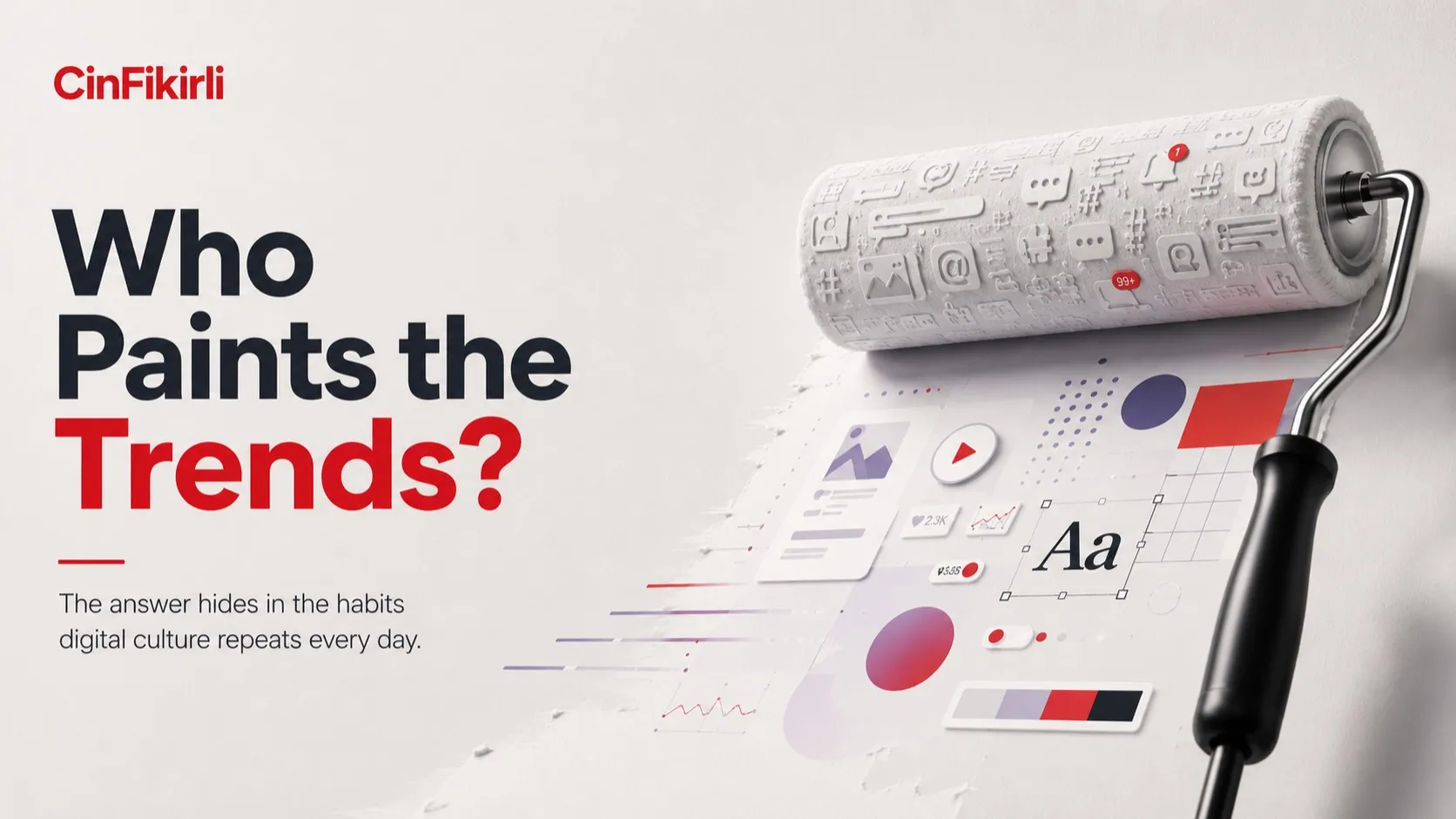
A campaign launches. It gets liked, shared, and wins awards. But the question is: why did this campaign capture the spirit of the moment? The answer often lies not in the design itself, but in the digital culture that feeds it.
Digital culture is everything a community produces, shares, and consumes online. It spans from memes to challenges, aesthetic movements to language games. And this culture directly influences design trends. You might say as a designer, 'Minimalist design is popular this year,' but the real reason is that users are experiencing information fatigue and seeking simplicity.
How User Habits Shape Design
Think about it: in the early 2010s, skeuomorphism—design that mimics realistic versions of objects—was all the rage. Apple's old Notes app with its faux leather texture was an attempt to bring an office environment into the digital realm. But people no longer needed a physical notebook. Cloud, search, speed... these came to the forefront. And flat design was born. Why? Because user habits changed: now, it's not about flashiness but functionality.
And now? It's 2024. A world ruled by TikTok, Instagram Reels, and Discord. The user interfaces of these platforms are shaped by the attention spans of younger audiences. Short, fast, attention-grabbing. Offering a long onboarding process on a brand's website today triggers the 'scroll' reflex for today's youth. So the design trend is built on micro-interactions and motion design. This isn't a choice; it's a necessity.
Brand Behaviors: The New Way to Say 'I'm Here Too'
What does a brand's bio say, for example? 'Innovative,' 'dynamic,' 'modern'... All clichés. But digital culture is pushing brands to abandon these clichés. Because users no longer want a brand to be 'cool'; they want it to be 'real.' Think about Nike's 'You Can't Stop Us' campaign. It's not just a sports video; it creates a sense of community, a feeling of belonging. This is a reflection of digital culture's emphasis on 'us.'
Or an example from Turkey: Getir. Its app interface is designed around the culture of fast ordering. Colors are vibrant, buttons are large, transaction times are short. This isn't a coincidence; it's based on the reality that users 'can't tolerate waiting.' Digital culture is recoding brand behaviors: now, you're not selling a service, but an experience.
The New Design Order: Understanding the User or Joining Them?
Here's the real issue: following design trends isn't enough. You need to understand the cultural current that creates them. It's easy to say 'neon colors are popular.' But why? Because Gen Z is aware they live in a dystopian world and embraces bright, artificial colors as a rebellion against this reality. Design becomes a tool for this rebellion.
So, when you make a design decision for your brand, which cultural current are you feeding? Or are you just doing it to 'look good'? Well, looking good isn't enough. The user needs to form a connection with that design. And that connection is only possible by properly embedding yourself within digital culture.
In conclusion, understanding the relationship between digital culture and design trends is a brand's survival strategy. Anyone who wants to be a trend creator, not a trend follower, needs to look more closely at the user's daily digital rituals. Because design is not just a visual language; it's a reflection of a culture.