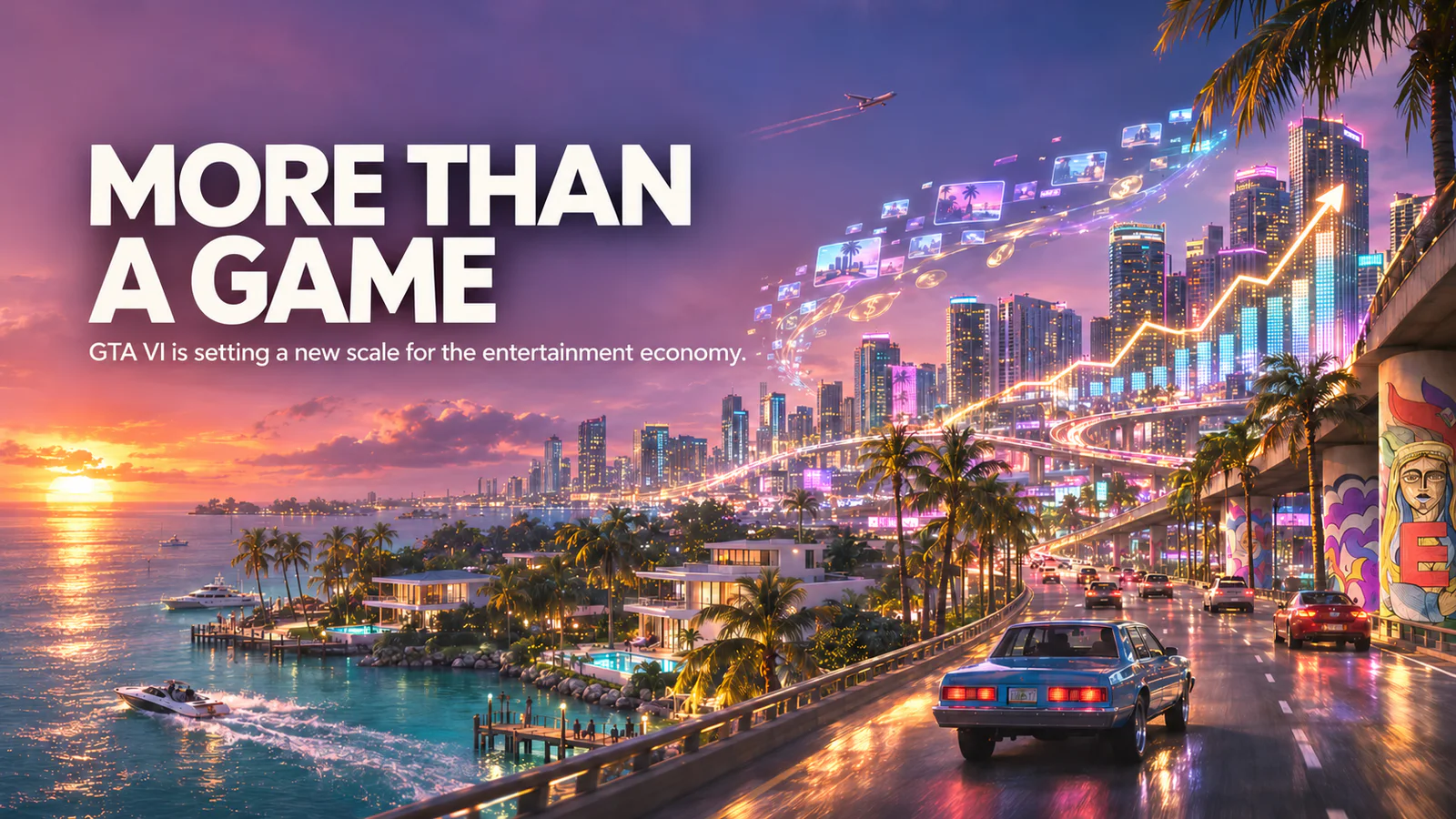
According to figures released by Take-Two, GTA VI generated $3.79 billion in retail sales on its first day. The game had already sold 32.5 million copies before release. Those are not merely impressive numbers for a video game. They force us to reconsider the scale of the entire entertainment industry, including cinema, music, publishing and television.
And this is only the opening day. GTA VI has not yet expanded beyond PlayStation 5 and Xbox Series X|S, while no official PC release date has been announced. Discount cycles, new console owners, GTA+ subscriptions, in-game spending and an ecosystem designed to last for years all sit outside that first-day calculation.
No one can honestly say today whether GTA VI will generate $20 billion or $30 billion over its lifetime. That is a scenario, not a published financial forecast. Yet it no longer sounds entirely fantastical for a product that reached $3.79 billion in a day, follows a game that sold roughly 235 million copies and can sustain a relationship with its audience for more than a decade.
This is not simply a game sale. It is the construction of an economic territory
A film earns money at the box office before moving to digital platforms, television and licensed products. An album is streamed, then continues through tours and catalogue revenue. A game like GTA, however, can keep a player’s time, social relationships and spending habits inside the same system long after the initial purchase.

What Rockstar is selling, then, is not only the story of Jason and Lucia. It is a cultural space in which a player may spend dozens or hundreds of hours: buying cars, choosing clothes, listening to music, taking screenshots and watching other people’s experiences.
GTA+ makes this structure visible from the outset by offering vehicles, garage access, store discounts and other in-game advantages within GTA VI. Payment does not end at the checkout. The purchase becomes an entry point into a longer economic relationship.
This is why comparing GTA VI with a film solely through opening revenue is inadequate. A film asks for a few hours of attention. GTA asks for money, time and repeated participation. Its economic power is measured not only by how many people buy it, but by how many years they remain inside its world.
One of the last products capable of stopping the world at once
Culture has become radically fragmented. We no longer watch the same series, listen to the same music or even see the same social media feed. Algorithms assemble a different agenda for each person. The scale of GTA VI lies in its ability to gather millions of people around the same date despite that fragmentation.
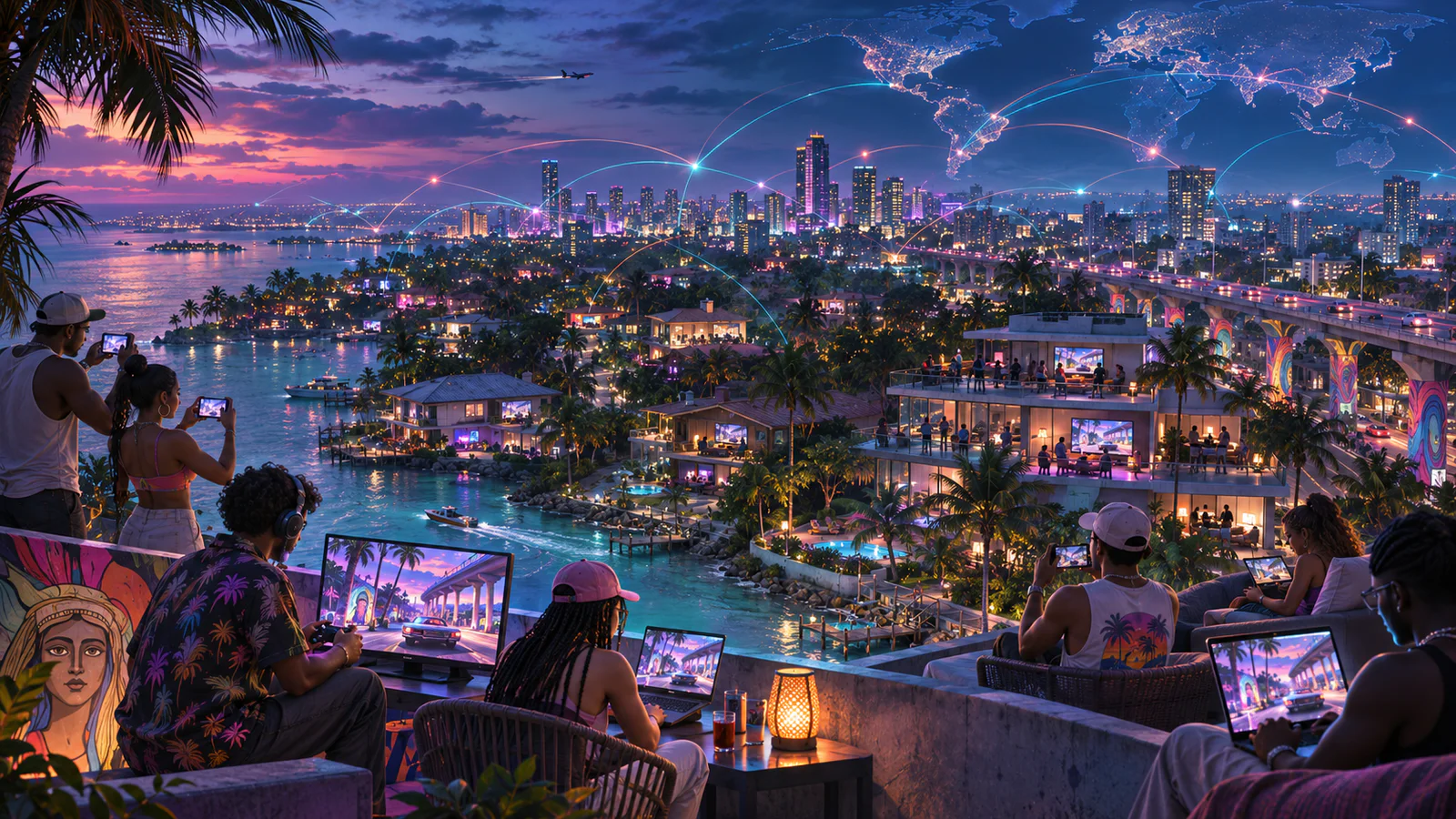
The game’s second trailer attracted more than 475 million views across platforms in its first 24 hours. On launch day, game stores, brands, streamers, creators and traditional media all turned toward the same cultural event. Even people who did not buy GTA VI could hardly avoid the jokes, arguments, broadcasts and brand reactions surrounding it.
That does not automatically make GTA VI the world’s largest entertainment brand. The word “largest” changes with the metric, and licensing systems such as Pokémon, Marvel and Star Wars broaden the debate considerably. But it is difficult to find another cultural brand capable of mobilising this much money and attention around a single product launch.
GTA’s distinction is not simply popularity. Thirteen years of anticipation, the three-console-generation lifespan of GTA V, the community built by GTA Online and Rockstar’s strategy of releasing relatively few products all compressed demand. GTA VI is not a hit that appeared overnight. It is the release of cultural pressure accumulated over years.
You do not have to be a player to study games
Cultural institutions that still treat video games as a hobby relevant only to those who play them are now missing the point. Games shape where music is heard, how cities are represented, which objects fashion circulates, what language internet humour adopts and how people organise their leisure time.
With GTA VI, the questions extend far beyond narrative or graphical quality. We need to examine how the game represents class, crime, consumption, cars, bodies and the American city, as well as the economic system that makes those representations playable.
This is an enormous culture factory. The labour of thousands of people, years of production, console platform commissions, retail, subscriptions, licensing, music, streaming, the creator economy and content produced without payment by players all become parts of the same machine.
Someone working in art or culture does not have to like GTA VI. They do not even have to play it. But it is becoming increasingly difficult to discuss contemporary popular culture without examining such an extraordinary concentration of capital, labour and attention.
Follow the money and the centre of culture comes into view
In 2025, consumer spending on video games in the United States alone reached approximately $60.8 billion. GTA VI’s worldwide first-day sales amount to roughly six per cent of that enormous annual market. The figures cover different geographies and accounting methods, so they cannot be treated as a direct market-share comparison. Even so, the scale is striking.
If cultural products never operate independently from capital, GTA VI is one of the clearest places to observe that relationship. Money does not merely finance the game. It also helps determine which technologies are developed, which platforms gain power, what millions of people watch and what the internet discusses for weeks.
Cinema can still confer prestige, literature can nourish intellectual life and contemporary art can produce new concepts. Yet the cultural field in which capital, mass attention and participation converge with such intensity is now, to a great extent, video games.
GTA VI is not an exception to this transformation; it is its most visible form. Building a serious understanding of video games is no longer simply a matter of respecting someone else’s hobby. It has become essential for anyone who wants to understand how money builds culture.