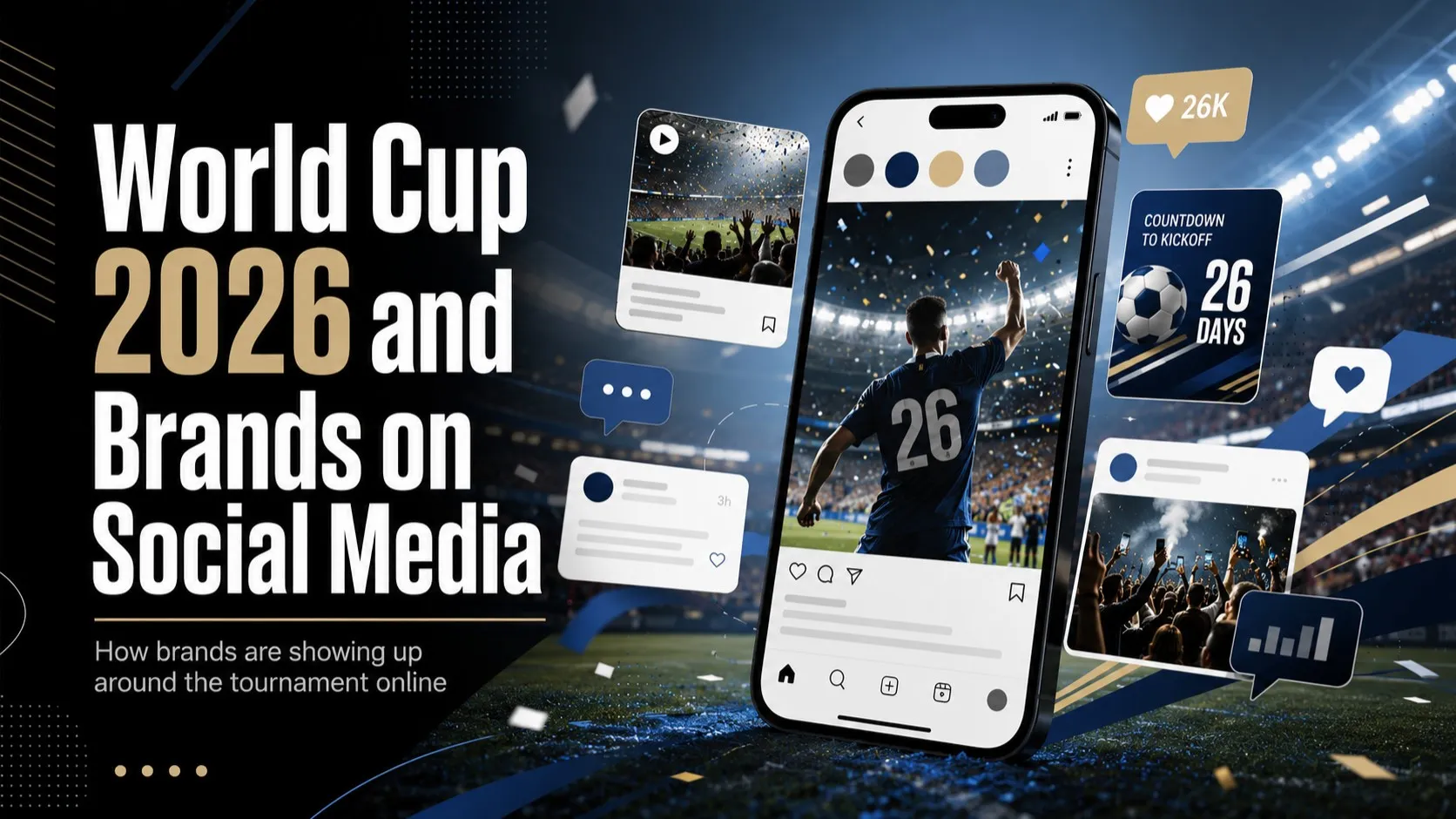
The 2026 FIFA World Cup is reshaping not just the football calendar but also brands' social media reflexes.
The new tournament format, spanning 48 teams, 104 matches, and 39 days, means a much more planned, more resilient, and more local social media operation for brands—rather than just posting more. The long-used "keep up with every moment" approach in major sports events no longer seems sufficient on its own for a tournament of this scale.
In past tournaments, social media teams mostly focused on goals, referee decisions, match results, or instant meme opportunities. In 2026, the number of matches, time zones, second-screen habits, and the diversification of fan culture make this model more challenging.
In the new era, the real issue for brands won't just be reacting quickly; it will be knowing when to speak, when to stay silent, and where to join the fan experience.
Resilient Social Media Operations Over "Always On"
The scale of the 2026 World Cup creates a serious operational burden for social media teams. The 39-day tournament spans three countries and different time zones. So it's unrealistic for a single team to follow all matches with the same intensity, produce content, manage approval processes, and sustain community management.
This picture requires brands to rethink the idea of a social media war room. Now, it's not just about teams that produce content quickly; structures with pre-defined shifts, decision-making mechanisms, approval flows, and crisis boundaries are coming to the fore.
To succeed in major tournaments, brands need better-established systems, not more people. Clear task distribution, pre-approved creative spaces, legal boundaries, visual templates, and content structures prepared for different scenarios are becoming key parts of this process.
In short, social media success at the 2026 World Cup will be a matter not just of creativity but of endurance.
Preparation for Real-Time Content Starts Before the Tournament
Real-time marketing often looks spontaneous. But a significant portion of the real-time content that works well in major tournaments is based on preparation done months in advance.
Many key dates—the opening match, group stage, semi-finals, and final—are already known. Brands can pre-determine their content frameworks, visual systems, possible win and loss scenarios, and player and team boundaries according to this calendar.
This approach doesn't mean content is fully ready. Rather, it's about separating fixed and flexible areas. Some content can be planned in advance; others can be adapted based on real developments during the match.
This system gives social media teams two things: speed and control.
Because thinking everything from scratch during the tournament not only slows things down but also increases the risk of mistakes. Especially in sensitive moments—controversial decisions, injuries, national rivalries, and disappointments—brands need to act as carefully as they do quickly.
You Don't Have to Respond to Every Moment
One of the biggest mistakes brands can make in a major event like the 2026 World Cup is thinking they have to be part of every conversation.
A 104-match tournament will produce countless goals, debates, memes, celebrations, and disappointments. But that doesn't mean every brand needs to speak at every moment.
In some moments, staying silent might be a better choice than appearing in the wrong place. Especially in a field with high emotional intensity like football, humor and speed aren't always safe.
A simple filter emerges for brands:
Does the brand really have something to say in this moment?
Does the audience get value from this content?
Is this tone appropriate for the emotion of the moment?
If a post is so generic that it could come from any other brand just by changing the logo, it's probably not worth making. In a crowded agenda like the World Cup, being visible for the right reason is as important as being visible.
Fan Experience Is a Broader Space Than the Match
In 2026 World Cup social media plans, brands need to look not just at the match itself but also at the fan behaviors surrounding it.
Fans already know the score. They don't learn the goal, the card, the result, or the match summary from brands. A more productive space for brands could be how fans experience the match, who they watch it with, what rituals they maintain, and what emotional moments they go through during the game.
Group chats, watch parties, office prediction games, midnight matches, penalty shootout stress, lucky jersey habits, match-day meals, and social media humor are all important parts of this experience.
Second-screen behavior also strengthens this picture. A significant portion of younger fans turn to their phones during match breaks, join group chats, and message friends during goal moments. This makes it more meaningful for brands to focus on the social behaviors around the match rather than just the match itself.
Local Fan Cultures Gain More Importance
The 2026 tournament will be hosted by the USA, Canada, and Mexico. This brings different time zones, travel conditions, access issues, and local viewing habits alongside the global excitement.
Not every fan will watch the match in the stadium. In some countries, matches will be followed at midnight or in the early morning. For some fans, the World Cup experience will happen not in big-screen squares but in neighborhood viewing areas, home gatherings, or small communities.
So brands are expected to focus on more concrete fan moments rather than the general "football unites us" language. A match watched at home in the early morning, the shared tension in a neighborhood café, a joke circulating in a group chat, or small pre-match preparations can create a more genuine connection than broad slogans.
A local approach isn't just about using a city name or adding a country flag. It's about understanding where, how, and with whom the fan actually experiences the match.
A New Social Media Standard for Brands
The 2026 World Cup will be a new test for brands' social media behavior in major sports events.
Posting more won't be enough on its own. Preparation, operational resilience, cultural intuition, knowing when to stay silent, and the ability to understand the fan experience will become more decisive.
The brands that stand out in this tournament won't just be those reacting to match results. Brands that understand how fans experience the tournament and join that experience from the right place and with the right tone will be more visible.
The 2026 World Cup will be not just a content calendar for brands but a 39-day social media endurance test.