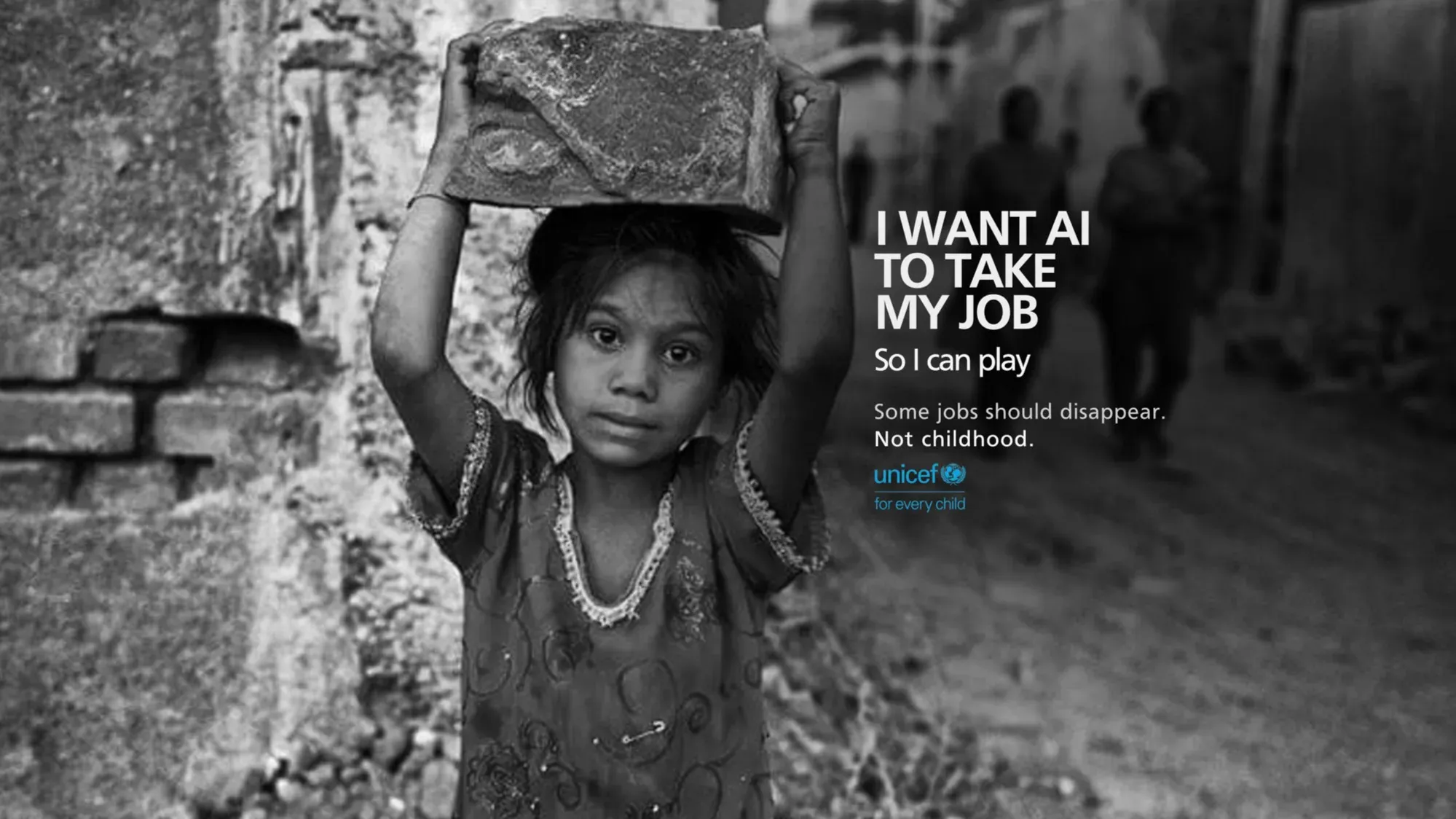
UNICEF is using the global anxiety about AI taking jobs to draw attention to the reality of child labor.
The print campaign titled “I Want AI to Take My Job” flips one of the most repeated tech fears of recent years. The phrase “AI will take my job,” often uttered by adults worried about losing their livelihoods, is now rewritten from the perspective of children who are forced to work.
At the heart of the campaign is a sentence that feels unsettling at first glance: “I Want AI to Take My Job.” This statement, which normally sounds like an adult expressing anxiety about the future, takes on a completely different meaning when placed in the context of child labor.
A Reversed Sentence in Places Where Children Work
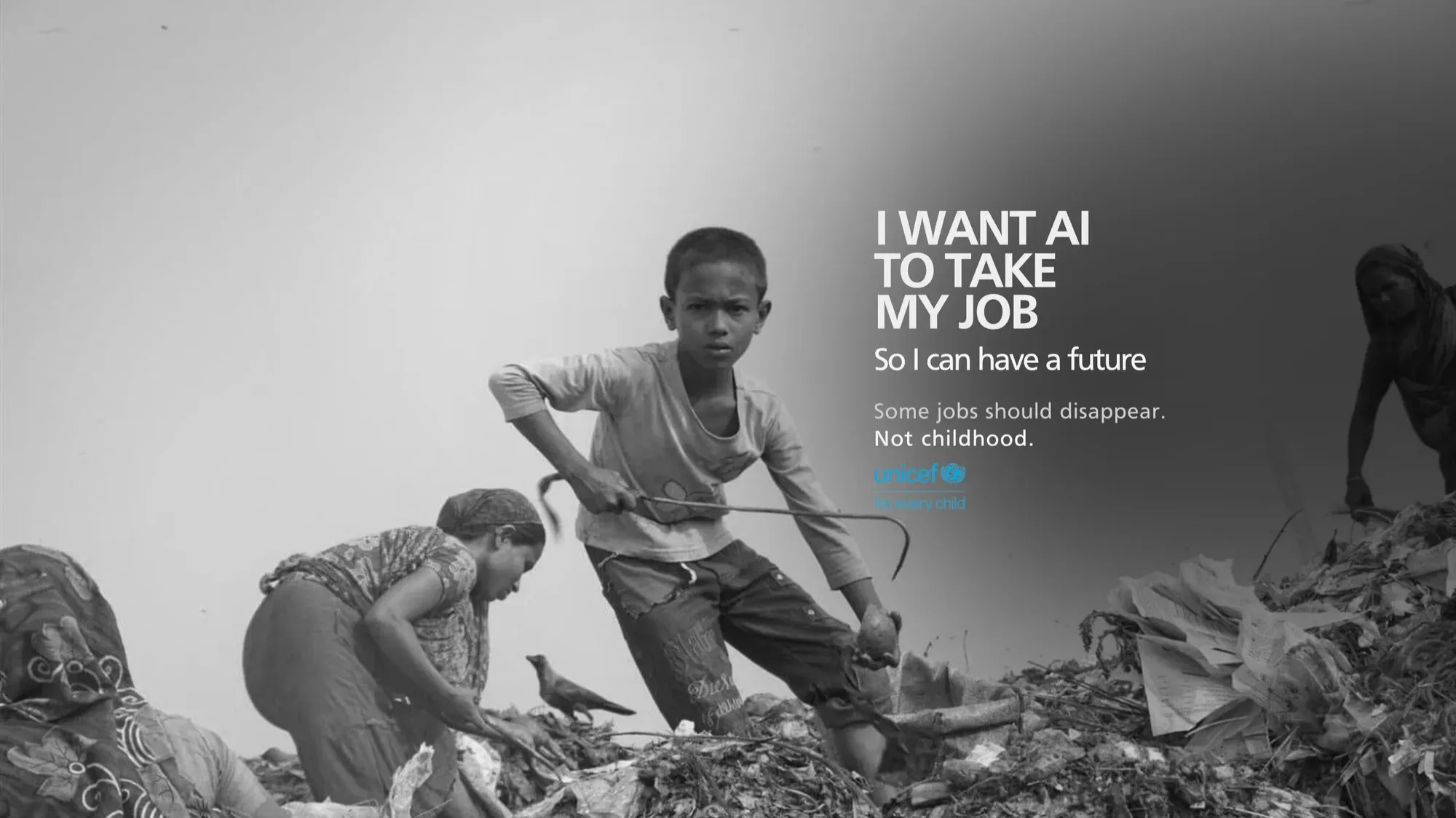
In the campaign visuals, children are shown in various contexts—workshops, factories, construction sites, and domestic work environments. These scenes focus on situations where children are forced to work instead of learning, playing, resting, and growing up safely.
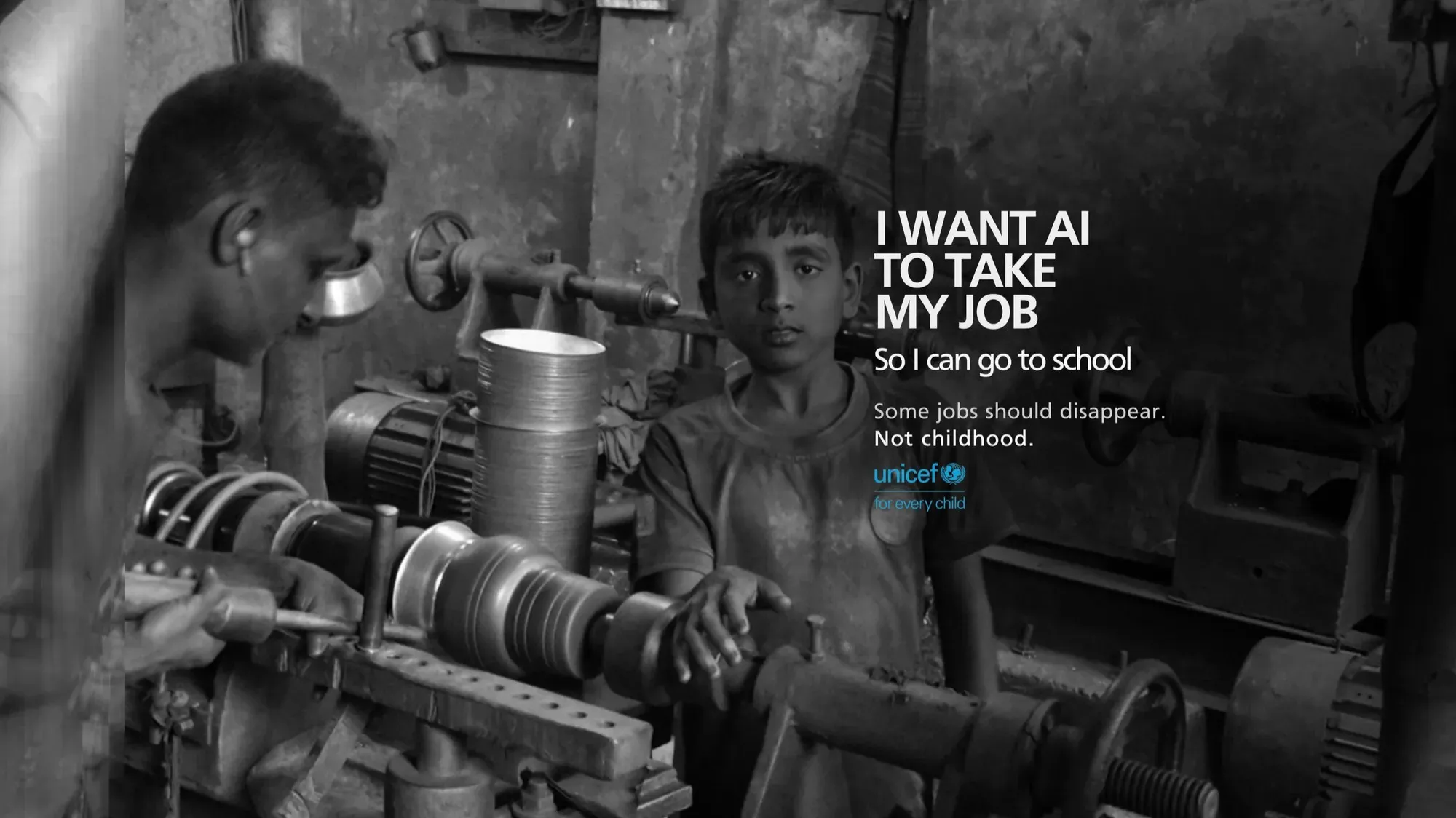
The phrase “I Want AI to Take My Job” thus transforms from a debate about a technological future into a narrative that makes visible the time stolen from children.
Supporting copy in the campaign makes the message clear. The reason children want AI to take their jobs is so they can return to school, remain children, and live a life where they don't have to work.
The final message crystallizes the campaign's core idea: Some jobs should disappear—but not childhood.
Connecting the AI Debate to a Social Reality
Discussions about AI and employment are usually framed around adults' careers, incomes, and future job security. UNICEF's campaign changes the speaker in this conversation.
Here, the person who wants to be “displaced” by AI is not an adult but a child forced to work. This shift creates the campaign's emotional and intellectual impact. While losing a job might be perceived as a threat for an adult, for a child trapped in child labor, escaping work means returning to school, play, and a safe space to grow.
The campaign does not present AI as a savior. The main issue is not that technology alone will solve child labor. The idea is to use one of the era's most visible fears to draw attention to a much older and ongoing problem.
From Future Anxiety to Today's Reality
“I Want AI to Take My Job” does not build a technological world in its visual language. Instead of shiny robots, digital interfaces, or futuristic effects, it uses physical, everyday, and unsettling work environments.
This choice keeps the campaign focused. AI is used only as an entry point; the real subject is children being forced to work and the loss of their right to childhood.
According to estimates published by UNICEF and the ILO in 2025, approximately 138 million children worldwide were engaged in child labor in 2024. Of these, about 54 million were working in hazardous jobs that pose risks to their health, safety, or development.
These figures remind us that the issue behind the campaign is not a future possibility but one of today's ongoing realities.
A Print Campaign Built on a Single Sentence
The campaign is built on a powerful reversal idea. At a time when many brands address the AI agenda with bright or anxious images of the future, UNICEF uses the same agenda with a simpler print language.
One visual, a direct headline, and a short supporting sentence are enough to carry the campaign's message. Its strength comes from taking an expected phrase out of its usual context and placing it in the context of child labor.
“I Want AI to Take My Job” follows the current debate around AI but does not build the campaign solely on AI. It redirects the tech agenda toward a more fundamental issue: children's rights and the right to education.
The campaign's copy and design work is credited to Arun Anoop.
UNICEF's work stands out as a simple, direct social impact piece that pulls the fear of AI out of an abstract future debate and connects it to an inequality children face today.